Home / Products / Beans, Peas & Lentils / Chickpeas
Wholesale ingredient • Documentation support • Custom processing
Chickpeas
Wholesale supply for Chickpeas (also known as garbanzo beans) with consistent size grading, food safety documentation, and flexible formats for manufacturers and brands across the USA & Canada.
Fast quote checklist
- Type: kabuli (large/light) or desi (small/darker)
- Size grade: preferred count/grade (application dependent)
- End use: canning, hummus, roasting, ingredient mixes, milling
- Processing: cleaned/sorted, splits, or flour-ready program (as available)
- Packaging: bags, totes, or private label (select programs)
- Volume: trial, monthly, or annual estimate
- Delivery: USA/Canada destination + timing window
Share your target cook behavior (hydration time, firmness) and we’ll recommend a suitable grade.
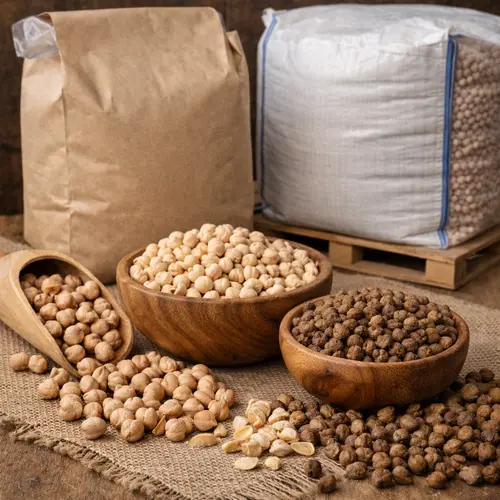
Ingredient overview
Chickpeas are a core ingredient for global food manufacturing—from hummus and dips to canned items, roasted snacks, soups, and prepared meals. Buyers often choose chickpeas based on size grade, appearance, hydration and cooking behavior, and how the ingredient performs in downstream processes such as canning/retort, roasting, and milling.
Common applications
- Hummus & dips: texture and flavor consistency, processing efficiency
- Canning / retort: size uniformity for fill and presentation
- Roasted snacks: consistent roasting performance and crunch
- Soups & ready meals: bite integrity, sauce absorption
- Ingredient manufacturing: base material for splits and flour programs
If you’re sourcing for a specific production line, tell us your process (soak/cook method, retort profile, roast temperature/time) so we can match the right grade.
Why buyers source from us
- Grade matching: identify the right chickpea type and size grade for your application
- Documentation support: COA, spec sheets, allergen statements, lot traceability where available
- Operational reliability: packaging and lane planning for recurring production
- Custom options: cleaning/sorting programs and processing options where available
- USA & Canada focus: responsive support for North American buyers
Typical buyer profiles
- Hummus, dip, and prepared foods manufacturers
- Canning/retort processors and foodservice packers
- Snack producers (roasted chickpea lines)
- Ingredient processors (splits, flour, blended ingredients)
Types, grades & common formats
Availability depends on origin and crop cycle. If you have a target spec, share it and we’ll match the closest option.
Kabuli chickpeas
- Typically larger and lighter in color
- Often preferred for canning and hummus presentation
- Common for foodservice and consumer-facing products
Best when size, appearance, and uniformity are priorities.
Desi chickpeas
- Typically smaller with a darker seed coat
- Often used in ingredient processing and regional cuisines
- Can be selected for specific processing objectives
Best when you need a smaller seed type or specific processing characteristics.
Program-dependent formats
- Whole dried chickpeas (multiple grades)
- Splits and processed formats (availability dependent)
- Flour-ready or milling supply programs (as available)
Tell us your end use and we’ll confirm options.
Choosing a size grade (practical guidance)
- Canning / retail packs: prioritize uniform size for fill weights and presentation
- Hummus: select grade based on soak/cook efficiency and finished texture goals
- Roasted snacks: uniformity supports consistent roast and crunch
- Soups & ready meals: select grade for bite integrity and sauce absorption
Provide your preferred grade/count (if you have one) or share your application and we’ll recommend a starting point.
Specification & QA support
For production efficiency, chickpeas are commonly sourced to a practical spec that aligns with receiving SOPs and end-use performance. Share your internal spec and we’ll align options accordingly.
Common specification items
- Size grading: uniformity targets aligned to your product
- Moisture: aligned to storage stability and processing
- Foreign material limits: supports receiving efficiency and QA
- Defects/tolerance: broken, discolored, or damaged kernels (program-dependent)
- Micro expectations: aligned to your process and product category
- Packaging configuration: liners, pallet pattern, labeling
Final specs vary by origin and program; we confirm current capability at quotation and/or PO.
Documentation for supplier approval
Documentation availability varies by origin and supplier program. Request current details with your quote.
Common documents
- Certificate of Analysis (COA)
- Specification sheet
- Allergen statement
- Country of origin statement
- Lot/traceability details
When available
- Organic certificate
- Kosher letter
- Non-GMO statement
- Additional QA statements (program dependent)
Need an audit-ready packet?
If your QA team has a supplier approval checklist or vendor questionnaire, attach it with your inquiry and we’ll coordinate what can be provided.
Request DocumentationCustom processing & service options
Many buyers need chickpeas that run efficiently through cleaning, hydration, cooking, or roasting steps. Depending on volume and program, we can explore options that better match your process and receiving requirements.
Cleaning & sorting
- Enhanced cleaning/sorting programs where available
- Foreign material reduction targets (program-dependent)
- Size uniformity improvements (grade dependent)
Ideal when you have strict incoming QA requirements.
Processing formats
- Whole dried chickpeas
- Splits or other processed formats (availability dependent)
- Supply programs aligned to milling (where applicable)
Ideal when chickpeas are a base input for downstream processing.
Private label support
- Private label/retail programs for select buyers
- Packaging and labeling coordination (program-dependent)
- Case pack and pallet planning
Ideal for brands building a finished retail SKU.
Custom options depend on origin and partner capability. Share your target spec and volume for feasibility.
Packaging options
Packaging depends on supplier program and destination. Common wholesale packaging formats include:
- Multi-wall bags with liners
- Bulk totes (volume/program dependent)
- Palletized loads with stretch wrap and corner protection as required
- Private label / retail-ready options for select programs
What to share for packaging
- Preferred unit size (bag weight, tote requirement)
- Warehouse receiving constraints (pallet height, dock access)
- Labeling and barcode requirements
Logistics for USA & Canada
We support shipment planning across the United States and Canada with logistics details aligned to production schedules. Provide your destination and timing window so we can propose the most practical delivery option.
Typical logistics details
- Lead time planning and delivery windows
- Pallet configuration and warehouse appointment needs
- Lot documentation coordination for receiving
- Support for import/export paperwork when needed
If you have preferred incoterms or carrier requirements, include them in your quote request.
Application guidance (practical considerations)
Chickpea performance is influenced by type, size grade, and process conditions. Below are the details we use to help match the right program.
Hydration & cook behavior
- Soak time and water uptake can vary by grade
- Cook firmness targets matter for canning/ready meals
- Uniform sizing improves process consistency
Roasting performance
- Uniform grade supports even roast and texture
- Moisture and cleanliness affect line efficiency
- Specify your roast method for best matching
Specs that reduce variability
- Size grade and defect tolerances
- Foreign material limits aligned to receiving SOP
- Packaging/liner details for storage stability
For faster recommendations, include your process outline (soak/cook/retort or roasting profile) and the finished product format.
Related categories
Browse categories where this ingredient is commonly sourced:
Beans, Peas & Lentils Flour & Plant Proteins Seeds & Grains Organic
FAQ
Do you have minimum order quantities (MOQs) for chickpeas?
MOQs depend on chickpea type (kabuli/desi), size grade, packaging, and origin. Share your destination and expected usage and we’ll reply with MOQ and lead time options.
Can you supply chickpeas for hummus and canning?
Yes. Many buyers source chickpeas for hummus, dips, and canning/retort production. Share your target grade, cook behavior, and pack format and we’ll recommend options.
Do you offer organic and kosher chickpeas?
Where available, we can quote organic programs and confirm kosher documentation. Availability depends on the specific origin/program.
What is the difference between kabuli and desi chickpeas?
Kabuli chickpeas are typically larger and lighter; desi chickpeas are typically smaller and darker with a thicker seed coat. The best option depends on your application and processing needs.
How should dried chickpeas be stored?
Store in a cool, dry environment in sealed packaging, away from moisture and strong odors, following your facility SOP. If you plan long-term storage, we can recommend packaging configurations based on your warehouse conditions.
Request a quote for Chickpeas
Share target specs (organic/kosher), chickpea type/grade, annual volume estimate, and delivery region (USA/Canada). If you have an internal specification sheet or a supplier approval checklist, include it with your request.
What we’ll send back
- Options matched to your type/grade requirements
- MOQ, lead time, packaging, and logistics guidance
- Documentation list (COA/spec/allergen, etc.)
- Recommendations based on your application/process
Best info to include
- End use (hummus, canning, roasting, meals, milling)
- Preferred chickpea type and size grade (if known)
- Cook/hydration expectations and finished texture goals
- Receiving requirements (pallet height, labeling)
Notes
Product details, specifications, and documentation availability can vary based on origin, crop year, and supplier program. Final specifications are confirmed at quotation and/or purchase order. Always follow your internal QA and regulatory requirements.