Products / Beans, Peas & Lentils
Organic • Kosher options • Non-GMO
Beans, Peas & Lentils
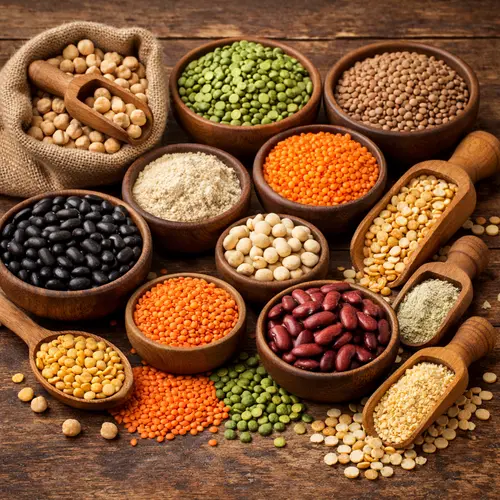
Wholesale supply for beans, peas & lentils with organic options, documentation support, and custom processing formats for USA & Canada buyers. These ingredients (often called “pulses”) support plant-forward formulations across soups, dry blends, ready meals, snacks, and protein/fiber-focused applications. We help buyers source consistent lots with the right sizing, color, and defect limits—plus blend-ready formats such as splits and flours where available.
Protein
plant-based nutrition positioning
Fiber
label-friendly functional content
Texture
whole, split, or milled options
Versatile
soups, meals, snacks, blends
On this page
Jump to item list, format guidance, quality docs, packaging, and the quote form.
Typical items in this category
This category page lists common pulse ingredients we can source. Availability, origin, and formats vary—request pricing for current options. For accurate alignment, share whether you need whole beans for cooking, splits for faster hydration, or milled formats for blending/extrusion.
| Ingredient | Common formats | Typical use cases | Notes |
|---|---|---|---|
| Black Beans | Whole (and select processed formats as available) | Ready meals, soups, chili, frozen applications | Ask about size grade, color uniformity, and defect limits |
| Chickpeas | Whole; splits and milled formats (as available) | Hummus, salads, soups, snacks, flour systems | Specify size (kabuli sizing) and intended use |
| Kidney Beans | Whole | Chili, ready meals, soups | Color and size uniformity can be important for appearance |
| Lentils (red, green, French green) | Whole; red often available in split format (as applicable) | Soups, bowls, ready meals, dry mixes | Specify variety and whether you need whole vs split |
| Navy Beans | Whole | Baked beans, soups, purees, bases | Often used for smooth textures in purees |
| Pinto Beans | Whole | Refried-style systems, soups, ready meals | Ask about color range and defect tolerance |
| Split Peas | Splits (green/yellow as applicable) | Split pea soup, instant soups, dry blends | Splits are commonly chosen for faster hydration and smooth texture |
Note: Pulse specs often include size/screen, color range, moisture, foreign material limits, and defect tolerances. If you’re matching an existing supplier, include your current specification sheet and any receiving inspection criteria.
Spec and grade alignment
Pulses are often purchased to meet a defined grade and cleaning standard. We help align size, color, and defect limits to your application.
- Size grading / screen specs
- Defect and foreign material controls
- Color uniformity targets
Formats for your process
Whole, split, or milled formats can change hydration and texture. We help you match the right format to your line and finished product.
- Whole beans for cook-and-hold systems
- Splits for faster hydration
- Milled formats for blends (as available)
Documentation support
Manufacturer-focused support for standard QA docs where available: COA, specs, allergen statements, and applicable certificates.
- Lot-level COA (where offered)
- Specs aligned to your QA requirements
- Traceability by lot and origin
Formats & specification considerations
Pulse ingredients are often chosen for nutrition and texture, but consistent supply depends on clearly defined specs. Below are common parameters buyers use when sourcing beans, peas, and lentils for manufacturing.
Whole beans and whole lentils
Whole formats are commonly used where you want intact appearance and a defined bite. Specs often focus on uniformity and defect limits.
- Size grade: screen sizing to control cooking uniformity
- Color range: important for visual consistency
- Moisture targets: impacts storage and shelf stability
- Defects: splits, discoloration, insect damage
- Foreign material: stones, stems, and other FM controls
Tip: For ready meals, uniform sizing can reduce under/overcooked beans within a batch.
Splits (split peas, split lentils, split chickpeas)
Splits are often chosen for faster hydration and smoother texture development. They’re common in soups, purees, and instant systems.
- Split integrity: controls fines and dusting
- Fines limits: impacts soup base thickness and appearance
- Hydration performance: time-to-soften in your process
- Color consistency: important in clear or light systems
- Cleaning standard: reduces foreign material risk
Tip: If you want a cleaner broth with defined pieces, choose a split with lower fines and add it later in the process.
Milled pulse formats (flours/powders)
Pulse flours and powders are used for protein and fiber positioning, extrusion snacks, baking blends, and as functional binders. Availability varies by item and program.
- Granulation/mesh: drives mouthfeel and dispersion
- Flavor profile: “beany” notes vary by processing
- Color: impacts finished product appearance
- Functionality: water absorption and viscosity behavior
- Application fit: baking vs extrusion vs blends
Tip: If you’re using pulse flour in bakery, share your target inclusion % and texture constraints so we can align granulation and taste profile.
Common documentation and QA needs
Pulse programs often require consistent QA documentation for supplier onboarding and receiving release.
- COA (lot-level where offered)
- Specification sheets
- Allergen statements
- Non-GMO statements (program-dependent)
- Organic and kosher certificates where applicable
Tip: If you have a vendor onboarding packet, attach it to your inquiry to speed up review.
How buyers use beans, peas & lentils
Pulses are used across many applications—whole formats for hearty texture, splits for faster hydration, and milled formats for functional blends. Buyers often specify the format based on the product’s rehydration/cook profile and the desired consumer experience.
Soups & bases
- Split peas and lentils for smooth bases
- Whole beans for hearty texture
- Consistent sizing for uniform cook
Ready meals
- Chickpeas and beans for bowls
- Texture stability considerations
- Clean, defect-controlled supply programs
Dry mixes
- Soup kits and meal kits
- Particle size matching to reduce segregation
- Splits for faster rehydration in consumer prep
Snacks & functional blends
- Pulse flours for extrusion (as available)
- Protein/fiber positioning
- Granulation control for mouthfeel
Whole vs split vs flour: choosing the right pulse format
Pulse format selection is usually driven by cook time, texture targets, and processing constraints. Here’s a practical comparison to help you choose the best format for your application.
| Format | Texture impact | Hydration / cook behavior | Best for | Common spec focus |
|---|---|---|---|---|
| Whole | Defined bite; intact appearance | Typically longer cook; uniformity matters | Ready meals, soups with whole pieces, bowls | Size grade, color, defects, foreign material |
| Split | Softer, breaks down more easily | Faster hydration; smoother base development | Soups, purees, instant systems | Fines limits, split integrity, hydration performance |
| Flour / powder | Blends into matrix; affects viscosity | Disperses; hydration controls texture | Snacks, baking blends, functional mixes | Granulation/mesh, flavor profile, color, flowability |
If you’re reformulating, share your target cook time, water ratio, and desired texture. Those details help align a format and spec that performs reliably.
Quality, food safety & documentation
Manufacturers typically require consistent paperwork for supplier approval and receiving release. Documentation availability depends on the supply program, but we can often support standard files requested by QA teams.
Common documents (as available)
- Certificate of Analysis (COA) by lot
- Specification sheets
- Allergen statements
- Non-GMO statements (program-dependent)
- Organic certificates for organic items
- Kosher certificates for certified programs
Common QA focus areas
- Foreign material controls and cleaning standard
- Defect limits and size uniformity
- Moisture targets and storage guidance
- Traceability fields (lot coding, origin)
- Program change notification expectations (where available)
If you have a vendor onboarding packet, attach it to your inquiry to speed up review.
Storage & handling guidance
- Keep sealed and protected from humidity
- Store cool and dry, away from strong odors
- Use FIFO rotation and record lot codes
- Plan receiving checks for pests and packaging integrity
Packaging & logistics for bulk pulses
Packaging depends on the ingredient and program. Many pulse items ship in food-grade bags; higher-volume programs may offer larger bulk formats. Share your receiving constraints so we can align packaging and delivery planning.
Typical packaging
- Food-grade bags for beans, peas, and lentils
- Bulk formats for select high-volume programs
- Palletized shipments aligned to warehouse handling
Exact pack sizes vary by program—tell us your preferred pack and pallet constraints.
Lead time drivers
- Crop year and origin availability
- Cleaning and sizing requirements
- Certification verification (organic/kosher)
- Lane capacity and appointment scheduling
Receiving checklist
- Delivery hours & appointment policy
- Dock type (standard dock vs ground unload)
- Labeling requirements (lot, PO, item code)
- Storage conditions (cool/dry, pest control readiness)
Request a quote for beans, peas & lentils
Share the details below and we’ll respond with available options for your target volume in the USA or Canada. This form pre-fills into your main contact workflow for faster handling.
Quick quote details
FAQ
Do you offer organic options for Beans, Peas & Lentils?
Many items in this category have organic options. Share the ingredient(s), format, volume, and delivery lane, and we’ll confirm availability by origin and supplier program.
Can you supply bulk packaging?
Yes—bulk and wholesale pack sizes are available depending on the ingredient. Many pulse items are available in bags, and some high-volume programs offer larger bulk formats. Tell us your receiving constraints.
Do you support custom processing?
Often yes. Depending on the item, we can support splits, flours/powders, custom granulations, and blend-ready formats for dry mixes and functional systems. Share your application and spec targets.
Which format is best for soups?
Split peas and red lentils are often chosen for faster hydration and smoother soup bases, while whole beans are used when you want defined pieces and bite. Your target cook time and texture will determine the best format.
Do you offer pulse flours for snacks or baking?
For select items, yes. Pulse flours and powders are used for protein/fiber positioning, extrusion snacks, and baking blends. Tell us your target mesh/granulation and inclusion rate so we can align a suitable option where available.
Can you provide documentation for QA onboarding?
Where available, we can provide COA, specification sheets, allergen statements, and applicable certificates (organic/kosher). If you have a vendor onboarding packet, include it with your request.
Ready to source beans, peas & lentils?
Whether you need whole beans for ready meals, split peas for soup bases, or pulse formats for dry blends, we can help align the right specs, documentation, and delivery plan for your production program.
For urgent requests, include ingredient, format (whole/split/flour), key specs (size/defects), volume, destination, and certification needs for the fastest response.