Home / Products / Organic Freeze-Dried Fruit / Blueberries (cultivated, wild)
Wholesale ingredient • Documentation support • Custom processing
Blueberries (cultivated, wild)
Wholesale supply for freeze-dried blueberries—including cultivated and wild options—built for consistent inclusion size, crisp texture, and production-friendly documentation for USA & Canada buyers.
Quick purchasing checklist
- Type: cultivated (larger inclusions) vs. wild (smaller, more uniform distribution)
- Format: whole, halves, slices, pieces, granules, powder
- Particle sizing: target cut size and sieve distribution for blends
- Performance: crispness retention, breakage tolerance, dust/fines control
- Specs: moisture / water activity targets, micro criteria, foreign material controls
- Certifications: organic and/or kosher requirements
- Volume: R&D trial, monthly demand, annual forecast
- Destination: USA/Canada delivery location and receiving constraints
- Documentation: COA/spec/allergen/traceability for onboarding
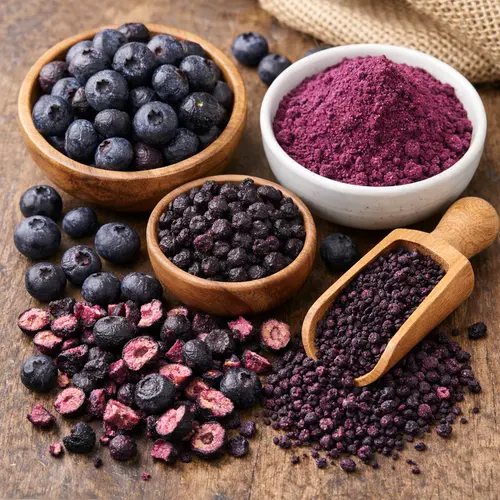
What does “cultivated vs. wild” mean for your product?
For product development and procurement, cultivated and wild blueberries typically differ most in berry size and how they behave as inclusions.
- Cultivated blueberries: often larger pieces with a bold “fruit inclusion” look—useful when you want visible, premium appeal.
- Wild blueberries: generally smaller pieces that can distribute more evenly—useful for uniform inclusion density and lower visual variability across servings.
- Both types: can be processed into whole, pieces, granules, and powder formats; final results depend on crop and processing.
If your blend segregates, smaller wild formats or controlled sizing may reduce separation during mixing and packing. If you want strong visual impact, larger cultivated formats may be preferred.
Why source freeze-dried blueberries wholesale through Atlas?
We help manufacturers and brands select a blueberry format that stays crisp, blends evenly, and comes with the documentation package your QA team needs to onboard quickly.
- Format selection: align whole vs. pieces vs. powder to your texture and appearance goals
- Sizing support: choose cut size and sieve distribution to reduce dust and improve blend uniformity
- Documentation support: COA/spec sheets + lot traceability where available
- USA & Canada buyers: procurement-friendly communication and logistics coordination
Documentation availability can vary by origin and format—request current details with your quote.
Common freeze-dried formats
Freeze-dried blueberries are popular because they deliver strong aroma, vibrant color, and crisp texture with low moisture. Choose your format based on how the ingredient will be handled, mixed, and packaged.
Whole berries
- Highest visual impact in cereals and premium mixes
- More sensitive to breakage during mixing
- Great for “hero inclusion” positioning
Best for: premium cereal blends, toppings, retail packs.
Halves / slices
- Strong appearance with improved blending stability
- Less fragile than whole in some mixing systems
- Useful for controlled inclusion size
Best for: granola, snack blends, bakery toppings.
Pieces
- Uniform distribution and easier portion control
- Specify cut size to match other inclusions
- Reduces segregation when sized correctly
Best for: bars, cereals, trail mixes, co-packer blends.
Granules
- Smaller particle size for uniform flavor delivery
- Less visual impact than pieces
- Useful for drink mix and premix systems
Best for: drink blends, baking premixes, functional powders.
Powder
- Concentrated flavor and color delivery
- Specify mesh/sieve range for dispersion
- Works in coatings, fillings, and beverages
Best for: drink mixes, confectionery, icings, inclusions.
Custom sizing / fines control
- Target sieve ranges to reduce dust and improve flow
- Match particle size to reduce segregation
- Helpful for repeatable co-packer runs
Best for: large-scale blending and repeat SKUs.
Need a specific cut size, sieve distribution, or breakage tolerance? Tell us your application and we’ll match an option.
Typical specs buyers request (freeze-dried fruit)
Specifications vary by supplier and lot. Below are common procurement and QA data points for freeze-dried blueberries.
- Type: cultivated vs. wild (and any origin preference)
- Format: whole/halves/slices/pieces/granules/powder
- Particle sizing: sieve range and fines % targets
- Moisture / water activity: key to crispness retention and shelf stability
- Color: visual consistency expectations for inclusions and powders
- Foreign material control: screening and metal detection where applicable
- Micro profile: standard ingredient microbial criteria where available
- Sensory: berry aroma intensity, sweetness/tartness balance, off-note tolerance
- Documentation: COA/spec sheets + traceability where available
Handling & storage notes (protect crispness)
Freeze-dried fruit can absorb humidity quickly, which softens texture and increases clumping. Storage and line handling are critical for maintaining performance.
- Humidity control: reseal packaging promptly; minimize open-air exposure
- Fast usage: stage only what you’ll use during a run to preserve crispness
- Blend strategy: match particle sizes to reduce segregation and breakage
- Packaging: consider moisture-barrier systems for crisp products (cereal, toppings)
If you’re using blueberries in crunchy products, tell us your packaging type and shelf-life target so we can recommend a format.
Applications & selection guidance
Freeze-dried blueberries are used when you need a premium sensory experience (aroma, color, texture) and low moisture. Below are common applications and format recommendations.
Cereal & granola
- Whole/halves for premium visual appeal
- Pieces for even distribution and portion control
- Wild formats can reduce segregation due to smaller size
Yogurt & dairy mix-ins
- Pieces for spoonable consistency
- Powder for swirl, flavor, and color systems
- Account for moisture migration in refrigerated applications
Snack toppings
- Whole berries for high visual impact
- Granules/powder for seasoning-style dusts
- Use moisture barriers to preserve crispness
Beverage mixes
- Powder for fast dispersion and flavor delivery
- Granules for controlled dosing
- Mesh selection impacts mouthfeel
Bakery & confectionery
- Powder for icings, fillings, truffles, coatings
- Pieces for topping applications (post-bake)
- Control fines to reduce dust during production
R&D trials
- Compare cultivated vs. wild for inclusion density
- Test different sizing to reduce segregation
- Set a spec for scale-up consistency
Options & documentation
- Ask for organic, kosher, and program-specific options
- COA and spec sheets for QA onboarding and receiving
- Lot traceability support where available
- Support for import/export paperwork when needed
- Private label support depending on program and volume
Documentation availability can vary by origin and format—request current details with your quote.
Packaging & logistics notes
Freeze-dried fruit is highly sensitive to moisture. Packaging and handling practices often matter as much as the ingredient itself.
- Moisture barrier packaging: helps preserve crispness during storage and distribution
- Palletization: reduces damage and supports warehouse receiving
- Lot labeling: aligned to COA/traceability
- Lead times: vary by crop cycle, format, and program availability
For consistent reorders, share your forecast and preferred format so we can align supply planning.
Quality approach (production-ready sourcing)
We help you select freeze-dried blueberry specs that work in your product: consistent sizing to reduce segregation, controlled fines to reduce dust, and documentation support for onboarding—especially important for repeat cereal and snack SKUs.
Spec alignment
Choose cultivated vs. wild and the right cut size to match your blend and target inclusion density.
Documentation support
COA/spec/allergen/traceability items typically requested for vendor onboarding and receiving QC.
Repeatability
Reorder-ready specs to reduce variability across batches, co-packers, and production sites.
FAQ
Do you have minimum order quantities (MOQs)?
MOQs depend on format (whole vs. pieces vs. powder), certifications, and packaging. Send your target volume and destination (USA/Canada) and we’ll confirm options.
How do cultivated and wild blueberries differ for inclusions?
Cultivated blueberries are typically larger for stronger visual inclusions. Wild blueberries are generally smaller, which can improve distribution and reduce segregation in blends. Results vary by lot and format.
Do you offer whole, pieces, and powder formats?
Yes—depending on availability. Common formats include whole berries, halves/slices, pieces, granules, and powder. Share your cut size or sieve preference and we’ll match an option.
Can I request organic and kosher options?
Where available, we can provide organic and/or kosher options and the documentation needed for your program.
What documentation can you provide?
Common documentation includes a COA, specification sheet, allergen statement, and country of origin. Additional documents may be available upon request depending on the lot and format.
Related categories
Browse categories where this ingredient is commonly sourced:
Organic Freeze-Dried Fruit Organic Dried Fruit Plant Proteins
Related products (commonly paired)
Freeze-dried blueberries are often sourced alongside these ingredients:
- Strawberries (freeze-dried slices/powder)
- Raspberries (premium inclusions)
- Coconut Flakes (granola and snack blends)
- Almonds (trail mix and bars)
Request a quote for Blueberries (cultivated, wild)
Share target specs (organic/kosher), preferred type (cultivated or wild), format (whole/pieces/powder), cut size or sieve range, estimated annual volume, and delivery region (USA/Canada). If you have an internal spec sheet, include it for faster matching.
What to include
- Company name + application (cereal, granola, topping, beverage, etc.)
- Type preference (cultivated vs. wild) + inclusion size goal
- Format and target cut size / sieve distribution
- Estimated quantity (trial, monthly, annual)
- Delivery city/state/province + receiving constraints
- Documentation needs (COA/spec/allergen/traceability)
What you’ll get back
- Matched options by type and format availability
- Documentation packet for QA onboarding
- Lead time + logistics guidance
- Reorder-ready spec alignment for repeat runs
Ready to start? Use the quote form and include as many details as possible.
Notes for QA & labeling teams
Availability, certifications, and documentation vary by supplier and lot. Confirm final specifications, labeling claims, and moisture/water activity requirements for your exact format before production and packaging approval.