Home / Products / Organic Dried Fruit / Strawberries
Wholesale ingredient • Documentation support • Custom processing
Strawberries
Wholesale supply for Strawberries (ingredient formats) with consistent specifications, food safety documentation, and flexible formats for manufacturers and brands across the USA & Canada.
What we supply
Strawberry ingredients are used for flavor, color, and real-fruit cues in cereals, bakery, snacks, dairy, and nutrition products. Depending on your application, you may prefer dried or freeze-dried formats—or a blend for the right texture and cost.
- Dried strawberries: chewier inclusions for bars, bakery, and snack mixes (often used where moisture tolerance is higher).
- Freeze-dried strawberries: crisp, lightweight pieces for cereals, toppers, and products needing fast rehydration.
- Powders & granules: for flavor/color support in dry blends and bakery/nutrition applications.
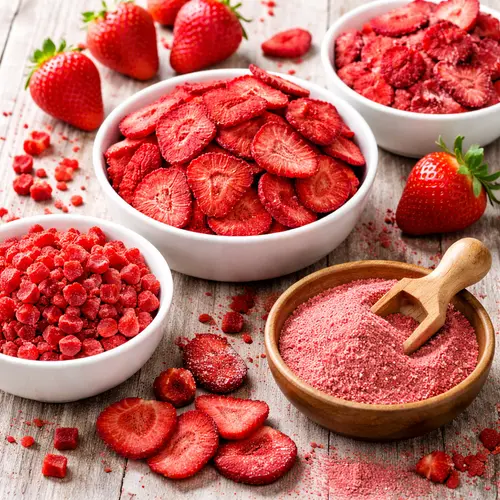
Common formats
Format selection is usually driven by texture (chewy vs crisp), processing conditions (baking, extrusion, mixing), and how visible the fruit needs to be. Share your end product and we’ll recommend a practical format and cut size.
- Whole (freeze-dried): premium visual for cereal cups and gift-style mixes (availability varies).
- Sliced: visible fruit pieces for granola, trail mix, and confection inclusions.
- Diced: controlled particle size for bars, cookies, and uniform distribution.
- Pieces: mixed particle format for blends and inclusions (cost-effective option).
- Granules: small particles for seasoning blends, dry mixes, and fast dispersion.
- Powder: fine grind for beverages, bakery mixes, and nutrition blends (sieve ranges can be specified).
- Custom cuts: mm/inch targets and sieve distributions depending on processor capability.
Need a specific cut size, sieve range, or moisture spec? Tell us what you’re making and your processing conditions (mixing time, bake temperature, etc.).
Options & documentation
We support procurement and QA documentation workflows for USA & Canada buyers. Availability can vary by origin and processing.
- COA & spec sheets: typical parameters include moisture, microbiological results, and size distribution.
- Traceability: lot documentation for receiving and production planning.
- Organic / kosher options: request current availability and certification needs.
- Allergen statements: ingredient statements and cross-contact notes where provided.
- Non-GMO statements: where applicable and available from the supply chain.
- Import/export support: paperwork alignment when needed for cross-border logistics.
If you have a vendor approval checklist, include it in your quote request to speed up onboarding.
Dried vs. freeze-dried: how to choose
Both formats deliver strawberry flavor, but they behave differently in processing and finished products. Choosing the right format helps protect texture, reduce breakage, and optimize cost.
Dried strawberries
- Texture: chewy, denser fruit bite.
- Best for: bars, cookies, bakery inclusions, snack mixes.
- Processing: often holds up well in mixing and forming; may darken with high heat depending on system.
- Considerations: moisture interaction can matter in low-water-activity products—share your target aw and shelf life expectations.
Freeze-dried strawberries
- Texture: crisp, lightweight; rehydrates quickly.
- Best for: cereals, yogurt toppings, snack mixes, premium inclusions.
- Processing: more fragile—specify breakage tolerance and packaging handling needs.
- Considerations: humidity exposure can soften pieces; packaging and plant humidity control can be important.
If you’re blending into cereal, ask about particle durability and fines levels.
A practical approach
Many manufacturers use a blend strategy: combine a base of cost-effective pieces with a portion of premium-looking slices or larger pieces to achieve the right visual and sensory impact. If you share your target price point and appearance goals, we can propose format combinations.
Common applications
Strawberry ingredients are used across multiple categories. Below are typical applications and which formats are commonly selected.
Cereal, granola & toppings
- Granola blends: sliced or pieces for visible fruit cues.
- Ready-to-eat cereal: freeze-dried pieces for crisp inclusions (humidity control matters).
- Yogurt toppers: freeze-dried slices or pieces for premium appearance.
- Oatmeal cups: freeze-dried for fast rehydration and strong flavor release.
If you need low fines for dust control, specify maximum fines percentage in your RFQ.
Bars, bakery & snack mixes
- Bars: diced or pieces for uniform distribution; dried formats often preferred for chew.
- Cookies/muffins: diced for even inclusions and reduced breakage.
- Trail mix: slices or pieces for visual appeal.
- Confection: pieces for inclusions or powder for flavor systems.
Tell us if you bake post-mix—heat exposure can influence color and fruit note intensity.
Dry blends, beverages & nutrition
- Drink mixes: strawberry powder for flavor and color support.
- Protein blends: powder or granules depending on mouthfeel.
- Baking mixes: powder for flavor and seasonal positioning.
- Seasoning-style blends: fine granules for dispersion and handling.
If mouthfeel is sensitive, specify your target mesh range and whether you need a “low seed” style profile.
R&D and reformulation
- Cost optimization: compare sizes (dice vs pieces) and formats (dried vs freeze-dried).
- Shelf-life stability: match moisture behavior to your base system.
- Visual match: align size distribution and color range to existing products.
- Process troubleshooting: reduce breakage/fines with alternative cuts and handling guidance.
If you’re replacing an existing supplier, share your current spec sheet or a sample description for fastest matching.
Typical quality & specification considerations
Strawberry ingredient specs vary by origin, season, and processing route. Below are the most common parameters procurement and QA teams request.
Pieces, slices & dice
- Cut size: mm/inch targets and sieve distribution definitions.
- Moisture: influences texture, shelf life, and mixing behavior.
- Defects: discoloration tolerance, stems/caps (if applicable), and foreign material limits.
- Microbiological targets: aligned to your category and risk profile.
- Sensory: strawberry aroma, color consistency, and taste expectations.
Powders & granules
- Mesh/sieve: affects dispersion and mouthfeel.
- Color intensity: can vary by crop; define acceptable range if critical.
- Flowability: important for dry blending and packaging.
- Micro targets: based on your QA program.
- Storage: keep sealed and dry to protect flavor and prevent clumping.
If you need a specific dispersion behavior in liquids, include your mixing method and beverage base type.
Packaging & logistics
Packaging depends on format and fragility. Freeze-dried fruit can be more sensitive to breakage and humidity exposure, so define your handling needs early.
Packaging examples
- Lined cartons: common for many dried and freeze-dried formats.
- Bulk bags: used for some pieces/powders depending on program.
- Palletized shipments: coordinated for efficient receiving.
- Humidity protection: important for freeze-dried formats to maintain crispness.
Share your pack-size preference and whether you need enhanced protection for fragile pieces.
Continuity & planning
- Forecasting: annual volume estimates improve continuity and tiered pricing.
- Lot planning: align COA timing with your receiving and QA release process.
- Alternatives: we can suggest comparable cut sizes if availability shifts.
- Call-offs: staged shipments may be possible for larger programs.
If your product is seasonal (e.g., limited-edition runs), share your timeline so we can plan supply.
How to request pricing (fast)
The fastest quotes come from clear format and performance requirements. If you don’t have a final spec, share your application and we’ll recommend a starting option.
Include these details
- Format: dried vs freeze-dried vs powder/granules.
- Cut size: whole/sliced/diced/pieces; mm range and acceptable fines level.
- Certifications: organic, kosher, other labeling needs.
- Quality targets: moisture, micro targets, defect tolerances.
- Volume: trial quantity + annual forecast.
- Application: cereal, bar, bakery, yogurt topping, dry mix.
- Delivery: destination region (USA/Canada) and receiving schedule.
What you’ll receive
- Price tiers: format comparisons and volume-based options.
- Availability notes: lead time guidance and continuity considerations.
- Documentation list: COA/spec and supporting statements where available.
- Next steps: sampling pathway (where available) and ordering workflow.
If you’re sourcing multiple fruits, we can consolidate quotes in one response.
Related categories
Browse categories where this ingredient is commonly sourced:
Organic Dried Fruit Organic Freeze-Dried Fruit Organic Ingredients Applications
FAQ
Which strawberry format is best for cereal?
Freeze-dried pieces are commonly used in cereal for crisp texture and strong visual cues. If your cereal is processed in humid environments or stored in high-humidity conditions, you may need packaging and handling controls to maintain crispness.
Can you match a specific diced size?
Often, yes—depending on processing capability and volume. Provide your target dice size (e.g., 3–5 mm) and acceptable fines percentage and we’ll propose available options.
Do you offer organic strawberries?
Organic options may be available depending on origin and processing route. Include organic certification needs and an annual forecast in your RFQ to support continuity.
Do you provide COA for each lot?
For many supply routes, COA is available per lot. Share your receiving and QA release workflow so we can confirm document timing and availability for the option you select.
Can you help reduce breakage and fines in freeze-dried strawberries?
Yes. Breakage is influenced by cut size, packaging, and handling. If you share your blending/packaging process, we can suggest a more durable cut, adjusted size distribution, or handling guidelines to reduce fines.
Request a quote for Strawberries
Share target specs (organic/kosher), desired format (dried/freeze-dried/powder), cut size or mesh, annual volume estimate, and delivery region (USA/Canada). If you’re replacing an existing ingredient, include your current spec sheet for faster matching.
Request Pricing