Home / Products / Flour & Plant Proteins / Wheat Flour
Wholesale ingredient • Consistent milling specs • Documentation support
Wheat Flour
Wholesale supply for Wheat Flour with consistent performance targets, QA documentation, and flexible formats for manufacturers, bakeries, brands, and co-packers across the USA & Canada.
Need flour for bread, pizza, tortillas, batters, or cake? Share your end product and we’ll recommend which specs to include for consistent results.
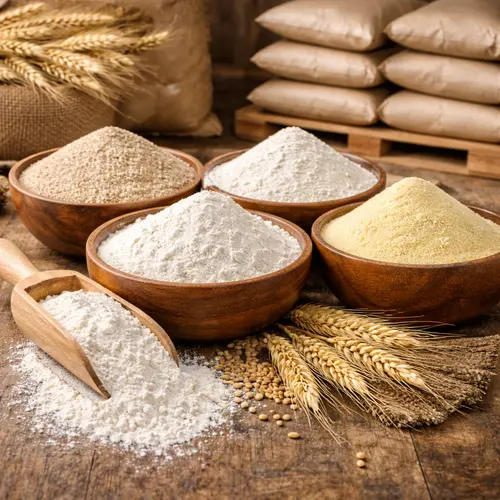
Common flour types
Flour selection is typically driven by protein level, ash content, and end-use performance needs.
- All-purpose (general use)
- Bread flour (higher protein)
- High-gluten (pizza/bagels)
- Cake/pastry (lower protein)
- Whole wheat (whole grain)
- Durum/semolina (pasta)
Best for
Wheat flour is foundational across baked goods, batters, coatings, and prepared foods.
- Bread, buns, bagels, pizza
- Cookies, cakes, pastries
- Tortillas, flatbreads, wraps
- Batters & breadings
- Soups/sauces (thickening)
Documentation support
Documentation availability can vary by program—request current details with your quote.
- COA & specification sheet
- Allergen statement (wheat/gluten)
- Lot traceability information
- Organic/kosher certificates (if requested)
Wheat flour buying guide (what to specify)
Flour is typically purchased by application and validated with measurable targets like protein, ash, and granulation. Providing these details helps ensure repeatable dough handling and finished-product consistency.
Key RFQ inputs
- End use: bread, pizza, tortillas, cake, cookies, batter, pasta, etc.
- Flour type: all-purpose, bread, high-gluten, cake/pastry, whole wheat, durum/semolina
- Protein range: aligned to structure and volume needs
- Ash content: commonly used for milling extraction/whiteness consistency
- Moisture: impacts handling and storage behavior
- Granulation: fine vs. standard; important for cakes/pastry and certain processes
- Enrichment: enriched vs. unenriched; malted vs. unmalted (as required)
- Treatment: unbleached vs. bleached (as required by your spec/label)
- Packaging: bag size/case pack/pallet configuration; bulk options for high-volume
If you don’t have target numbers, tell us your current flour name/spec or send a label/photo of your ingredient statement and we’ll suggest the correct spec to quote.
Performance & quality parameters buyers often request
Exact parameters vary by mill and flour type. Below are examples of common attributes used to control bakery performance and process consistency.
Core identity
- Protein range (application-specific)
- Ash target
- Moisture target
- Color/whiteness guidance
Dough behavior
- Absorption guidance
- Dough strength/tolerance (if requested)
- Mixing time window (process-based)
- Extensibility/elasticity targets (if requested)
Granulation
- Particle size distribution
- Sieve retention targets
- “Fine” vs. “standard” milling
- Semolina granulation (pasta)
Compliance
- Allergen statement (wheat/gluten)
- Organic/kosher certificates (if requested)
- Lot traceability information
- Specification & COA availability
Some programs reference milling performance tests (e.g., absorption/dough strength). If your QA team uses a specific method, share it and we’ll align the right option.
Applications & recommended flour types
Different products require different flour characteristics. Below are common applications and the flour choices buyers frequently start with.
Bread, buns & laminated dough
- Typical choice: bread flour
- Optimize for structure and volume
- Specify protein range and tolerance
- Consistent absorption supports scaling
Pizza & bagels
- Typical choice: high-gluten
- Strength for long fermentation
- Chew and extensibility control
- Stable performance on lines
Cake & pastry
- Typical choice: cake/pastry flour
- Lower protein for tenderness
- Fine granulation for uniform crumb
- Color/whiteness often specified
Cookies & crackers
- Typical choice: all-purpose or pastry
- Spread control and bite texture
- Consistency in absorption
- Granulation can matter on high-speed lines
Tortillas & flatbreads
- Typical choice: tortilla/flatbread program flour
- Extensibility and machinability
- Consistent absorption for press lines
- Control on tearing and puffing behavior
Pasta & semolina products
- Typical choice: durum flour / semolina
- Granulation targets for extrusion
- Color and speck control
- Protein targets for bite/strength
Not sure which flour fits? Tell us your product and process (mixing method, fermentation time, line type) and we’ll suggest the right starting flour and spec fields.
Packaging & logistics
Packaging selection depends on throughput, staging, and warehouse handling. Share your receiving setup and we’ll quote the best-fit configuration.
Common wholesale packaging
- Bagged flour: palletized bags for standard bakery/manufacturing operations
- Case-packed: smaller units for controlled staging
- Bulk formats: for high-volume users (program-dependent)
What to include for freight quoting
- Ship-to city/state/province (USA/Canada)
- Dock/forklift availability and receiving hours
- LTL vs. FTL preference (or “best option”)
- Requested lead time and release schedule
If your operation uses silos or requires bulk pneumatic delivery, include that in your request so we can confirm options.
Options & documentation
Documentation availability can vary by origin and program—request current details with your quote.
- Ask for organic, kosher, and program-specific flour options
- Traceability and lot documentation for production planning
- Support for import / export paperwork when needed
- Private label coordination (volume-dependent)
Common label choices
- Enriched vs. unenriched (as required)
- Bleached vs. unbleached (as required)
- Malted vs. unmalted (application-based)
- Whole grain content (whole wheat programs)
How to request a quote (fastest turnaround)
Share a few details and we’ll respond with options aligned to your product, performance targets, and delivery needs.
1) Application
- Bread / pizza / cake / tortillas
- Process notes (fermentation time, line type)
- Any current flour spec/name to match
- Enriched/bleached preferences
2) Target specs
- Protein range and ash target
- Granulation/sieve preferences
- Absorption/tolerance needs (if known)
- Any QA test method requirements
3) Volume & delivery
- Trial quantity and ramp plan
- Monthly/annual estimate
- Ship-to region (USA/Canada)
- Preferred packaging and release schedule
FAQ
Answers to common wholesale purchasing questions for wheat flour programs.
Do you have minimum order quantities (MOQs)?
MOQs depend on flour type, packaging, and program requirements (organic/kosher). Send your target volume and we’ll reply with options.
Can I request organic and conventional pricing?
Yes. Where available, we can quote organic and conventional options so you can compare cost, labeling, and documentation.
Can you match my current flour spec?
Yes—send your current spec sheet or share your key targets (protein, ash, granulation, enriched/bleached) and we’ll quote the closest match available.
What’s the difference between bread flour and all-purpose flour?
Bread flour is typically specified at a higher protein range to support stronger gluten development and structure, while all-purpose is a more general-use flour. For exact targets, it’s best to specify protein range and application.
How should flour be stored in production?
Store sealed in a cool, dry area away from moisture and odors. Use FIFO inventory practices and protect bags from puncture. For bulk systems, maintain clean transfer lines and follow your facility’s sanitation procedures.
Related categories
Browse categories where this ingredient is commonly sourced:
Request a quote for Wheat Flour
Share flour type (bread/all-purpose/cake/whole wheat/durum), any target protein/ash requirements, annual volume estimate, and delivery region (USA/Canada).
Request Pricing