Home / Products / Organic Dried Fruit / Tomatoes
Wholesale ingredient • Documentation support • Flexible cuts • USA & Canada
Tomatoes
Wholesale supply for Tomatoes (dried tomato ingredients, including organic options where available) with consistent specs, food safety documentation support, and flexible formats for manufacturers, brands, and co-packers across the United States & Canada.
Need dried tomatoes for bakery, snacks, sauces, or meal kits? Share your cut preference (strips vs. dice), target texture (chewy vs. softer rehydrated), and whether you need organic positioning. We’ll propose options aligned to your product goals and processing method.
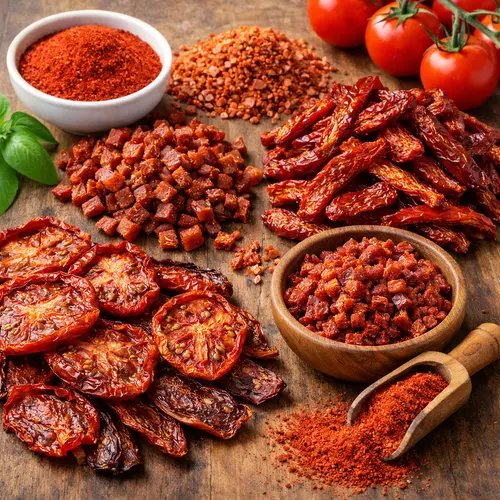
What it is
Dried tomato ingredients are shelf-stable tomato products processed to reduce moisture while concentrating flavor. They are commonly supplied as sun-dried or dehydrated formats and then cut into strips, slices, dices, or milled into granules/powders. In manufacturing, dried tomatoes deliver tomato flavor and visual identity without the handling challenges of fresh tomatoes, making them popular for inclusions, toppings, and dry blends.
Common buyer goals
- Flavor intensity: concentrated tomato taste for savory systems
- Texture control: chewy inclusions vs. faster rehydrating cuts
- Visual identity: visible red pieces in mixes, breads, and meal kits
- Operational convenience: stable storage and predictable handling
If you’re replacing fresh tomato inclusions, share your target piece size and desired bite after processing—we can suggest cuts that hydrate and hold shape as needed.
How we support manufacturers
- Cut/size alignment (strips, slices, diced, granules, powders)
- Spec matching for moisture targets, appearance, and performance
- Documentation support (COA, specs, traceability statements)
- Program planning for recurring production and forecasting
- Custom processing (sieving, blending, cut adjustments) depending on volume
Fast quote checklist
Include these details for the fastest match:
- Format (sun-dried vs. dehydrated; dry vs. application-specific needs)
- Cut (strips/slices/dice) or powder/granule mesh preference
- Application (bakery, snacks, sauces, meal kits, seasoning blends)
- Texture requirements (chewy inclusion vs. faster rehydration)
- Certification needs (organic, kosher, etc.)
- Packaging preference and annual volume estimate
Common formats & cuts
Availability varies by origin, seasonality, and program volume. We’ll confirm current options and feasible spec ranges with your quote request.
Sun-dried tomatoes
- Often selected for concentrated flavor and chewy texture
- Popular in premium savory bakery, prepared foods, and Mediterranean-style products
- Used as strips or pieces depending on the finished product design
Dehydrated tomatoes
- Standardized industrial option with broad availability and consistent performance
- Commonly used in dry blends, soups, sauces, and ready-meal systems
- Available in multiple cuts and can be milled into granules/powders
Strips / julienne
- Visible inclusions for breads, flatbreads, crackers, and savory mixes
- Good for products where “tomato pieces” are a key consumer cue
- Cut length and thickness can influence hydration and bite
Diced / pieces
- Uniform distribution in snack mixes, meal kits, sauces, and fillings
- Often preferred for consistent bite and controlled appearance
- Ask for sieve ranges if you need tight piece-size control
Granules & powders (availability dependent)
- Granules for controlled dosing with reduced dust vs. powders
- Powders for fast flavor release and uniform dispersion
- Useful for seasonings, soups, and sauce bases
Need a custom cut distribution (less fines, tighter sieve range)? Share your target spec and we’ll review feasibility.
Packaging & wholesale formats
Packaging depends on cut, moisture target, and volume. We align to common receiving and production needs for manufacturers and co-packers.
Common packaging configurations
- Bags for bulk dry ingredient receiving and batching
- Case packs for smaller-scale programs and co-packers
- Private label may be available depending on configuration and volumes
Operational considerations
- Moisture control: reseal promptly; diced/powder formats can clump under humidity
- Color carryover: tomato pigments can stain surfaces—plan sanitation accordingly
- Piece integrity: strips/dice can generate fines with aggressive handling—optimize handling to preserve spec
Private label support
If you need retail-ready dried tomato packaging, share target pack sizes, label requirements, and forecast volumes to review options.
Typical specifications buyers reference
Dried tomato specs vary by format and origin. If you have an existing spec sheet, send it—we can often match or propose a close equivalent.
Common specification areas
- Cut size / sieve distribution (strips, dice, granules, powder mesh)
- Moisture targets for stability and texture
- Color expectations for finished product appearance
- Flavor profile tolerances (sweetness, acidity balance, cooked notes)
- Micro parameters aligned to your risk profile and application
- Foreign material control expectations aligned to your plant SOPs
If your product is texture-sensitive (bars, bakery inclusions), include your desired bite after hydration and any baking/cooking steps.
Documentation support (QA / Procurement)
Documentation availability can vary by origin and lot. We can support common requests used in onboarding, audits, and customer approvals.
- COA (lot-specific)
- Specification sheets and handling guidance
- Traceability support aligned to lot/batch identifiers
- Allergen statements and cross-contact declarations (as applicable)
- Origin statements when required
If you have a specific documentation template or portal upload requirement, include it in your quote request so we can align.
Common food applications
Dried tomatoes are used across categories for flavor, color, and inclusions identity. Below are typical use cases and what product teams optimize for.
Savory bakery & mixes
- Focaccia, crackers, flatbreads, savory muffins, bread mixes
- Strips and diced pieces add visible identity and tomato flavor
- Teams optimize for hydration behavior so pieces stay pleasant after baking
If pieces feel too firm after baking, tell us your bake profile and we can suggest smaller cuts or pre-hydration strategies.
Prepared foods, sauces & fillings
- Meal kits, pasta sauces, dips, fillings, marinades
- Diced formats for uniform distribution; strips for premium visual cues
- Teams optimize for rehydration time and flavor release in wet systems
If you retort or hot-fill, share your time/temperature profile to align to a format that holds up in processing.
Snacks, trail mixes & inclusions blends
- Snack mixes, savory clusters, inclusions blends
- Diced pieces provide controlled bite and consistent distribution
- Teams optimize for piece integrity and reduced fines generation
If you run high-speed blending, ask for sieve distributions designed to reduce fines.
Seasonings & dry blends
- Tomato-herb blends, soup bases, seasoning packets
- Granules/powders for uniform flavor; flakes for visual specking
- Teams optimize for flow, dust management, and hydration performance
Tell us whether you need fast reconstitution or visible tomato identity—format choice makes a big difference.
Formulation notes (practical)
Performance depends on cut size, moisture, and system hydration. These are common considerations for R&D teams.
- Rehydration: smaller cuts hydrate faster; strips may require more dwell time
- Texture tuning: choose cut size based on desired chew vs. softer bite
- Color distribution: powders/granules deliver uniform color; pieces deliver localized cues
- Blend segregation: match particle size with other ingredients to reduce settling
- Acidity balance: tomato can add tang—adjust salt/acidulants accordingly
If you’re matching a benchmark sun-dried tomato inclusion, share your target piece size and finished bite to speed up selection.
Handling & storage guidance
Always follow handling guidance on your lot documentation. In general, dried tomatoes retain quality best when protected from humidity and oxygen exposure.
- Store sealed in a cool, dry area; reseal promptly after opening
- Moisture control: diced/powder formats can clump in high humidity
- Odor control: store away from strong-smelling materials
- FIFO rotation to maintain consistent flavor, color, and texture
If you need a specific shelf-life window for retail or export programs, include that requirement in your request.
Common formats (summary)
- Sun-dried tomato strips/pieces (availability dependent)
- Dehydrated tomato slices/strips
- Diced dried tomatoes
- Granules (controlled cut sizes)
- Powder (mesh options)
- Custom cuts and sieve distributions (volume-dependent)
Need a specific cut size, sieve range, or moisture spec? Tell us what you’re making and we’ll match an option.
Options & documentation
- Ask for organic, kosher, and custom processing options
- Traceability and lot documentation support for production planning
- Support for import/export paperwork when needed
Documentation availability can vary by origin and format—request current details with your quote.
Related categories
Browse categories where this ingredient is commonly sourced:
Organic Dried Fruit Freeze-Dried Vegetables & Herbs Spices & Seasonings
FAQ
Common questions from procurement, QA, and R&D teams.
Which cut is best for bakery inclusions?
Strips can deliver premium visual cues, while diced pieces distribute more evenly and can be easier to manage on high-speed lines. The best option depends on your hydration, bake profile, and desired bite. Share your application and we’ll suggest an appropriate cut.
Do dried tomatoes need pre-hydration?
Some applications benefit from pre-hydration (especially larger strips) to reduce firmness and improve eating quality. In other systems, direct addition is fine if there’s enough moisture and dwell time. Tell us your process and we’ll recommend best practices.
How do I choose between strips, dice, and powder?
Strips/dice provide visible tomato identity and texture, while powders deliver uniform flavor and color with faster dispersion. If you need both identity and base flavor, some formulas combine pieces with powder. Share your goals and we’ll propose options.
What documentation can you provide?
We can support common documentation requests such as COA, specification sheets, and traceability materials. Allergen statements and cross-contact declarations are available where provided by the facility and lot documentation.
Can I request organic and conventional pricing?
Yes. Where available, we can quote organic and conventional options so you can compare cost, lead time, and labeling needs.
What are typical MOQs?
MOQs depend on format, packaging, and origin. Share your estimated monthly/annual volume and we’ll confirm MOQ options.
Need help selecting a dried tomato format?
Send your application, preferred cut, texture goals, and any processing steps (bake/cook/retort) and we’ll propose options aligned to your needs.
Request PricingRequest a quote for Tomatoes
Share target specs (organic/kosher), format (sun-dried/dehydrated; strips/dice/granules/powder), annual volume estimate, and delivery region (USA/Canada). If you’re matching an existing supplier, include your current spec sheet and cut preferences.
Recommended info to include
- Use case: bakery, ready meals, sauces, snacks, seasoning blends
- Format: sun-dried vs. dehydrated
- Cut: strips/slices, diced, granules, powder (mesh)
- Texture goal: chewy inclusion vs. softer bite after hydration
- Packaging: bags, case packs, private label (if needed)
- Volume & timeline: pilot vs. ongoing program
How sourcing programs typically work
- Spec-driven: cut size and moisture targets guide selection
- Process-driven: bake/cook steps influence ideal format and pre-hydration needs
- Volume-driven: recurring programs may unlock tighter processing controls
We’ll respond with feasible options and tradeoffs (availability, lead time, packaging, documentation) so you can move forward confidently.
Explore more
If you’re building a dried fruit & vegetable inclusions list, these pages may help:
All Products Applications Ingredient Guides Quality Sustainability