Home / Products / Organic Dried Fruit / Goji Berries
Wholesale ingredient • Documentation support • Custom processing
Goji Berries
Wholesale supply for organic dried goji berries with consistent specs, food safety documentation, and flexible formats for USA & Canada buyers. Goji berries are popular inclusions for granola, snack mixes, bakery, tea blends, and wellness-oriented products where color and fruit character matter.
To speed quoting, include your preferred grade/size, moisture target (if specified), packaging preference, and end use (trail mix, granola, tea, bakery, confectionery).
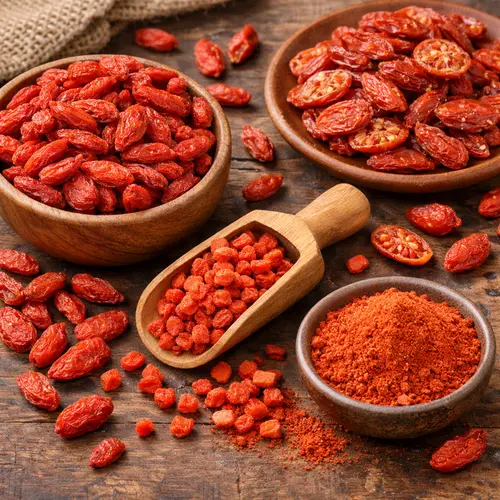
Goji berries sourcing overview
For manufacturing, goji berries are typically specified by size/grade, color, moisture, and cleanliness. These variables influence how the berries look in finished products, how they handle in blending and packaging, and how they perform over shelf life. If you’re switching suppliers, matching your incumbent size grade and moisture range helps maintain consistent consumer experience.
Appearance & grade
Larger, more uniform berries can improve visual presentation in transparent packaging and premium products. If appearance is critical, specify size range and your tolerance for breakage/fines.
Texture & moisture
Moisture impacts chewiness, stickiness, and blending behavior. If your product is sensitive to clumping or smearing (bars, chocolate), include your preferred moisture range and handling notes.
Process fit
Goji berries can be delicate. Mix method and packaging line intensity influence breakage. If you use ribbon blending or long distribution, specifying durability requirements can help select a more suitable grade.
Common formats
Goji berries are typically supplied as dried whole berries, but options can vary depending on availability and program. If you need a specific size grade or a processing step for your application, include it in your request.
Whole dried goji berries
- Size graded options: support consistent appearance and dosing.
- Color targets: range may vary by crop and origin; share your visual requirements.
- Controlled breakage/fines: important for granola, snack mixes, and window packaging.
- Blend-ready handling: available depending on program and volume.
If you’re producing a premium inclusion product, specify the expected “show value” and packaging type (pouches, jars, window boxes).
Custom processing (as applicable)
- Smaller cuts/pieces: improved blend uniformity in cereals and bars.
- Powder (as available): used for flavor systems and functional blends.
- Sieve/screening: manage fines to reduce dust and clumping.
- Private label packaging: retail-ready options depending on volume and destination.
If your use case is bar manufacturing, tell us your process—smaller inclusions can reduce tearing and improve cut performance.
Common applications
Granola & cereal
Whole berries for visual identity, or pieces for uniform distribution and reduced sorting.
Snack mixes
Trail mix, nut blends, and functional snack blends where color contrast matters.
Tea & wellness blends
Fruit-forward blends and ingredient kits where steeping/rehydration behavior matters.
Specification framework
Specifications vary by origin, crop conditions, and processor. Below is a practical checklist used by procurement and QA teams to approve goji berries. We can provide current spec sheets and COA(s) for lots being quoted.
Typical quality parameters
- Grade/size: size range and uniformity expectations
- Moisture: target range to balance chew and reduce clumping risk
- Breakage/fines: limits based on your blending and packaging process
- Organoleptic: fruit character, sweetness/tartness balance, off-note controls
- Foreign matter: screening and inspection expectations aligned to QA needs
If you have an incumbent supplier spec, send it—we can usually match size and appearance faster and reduce sample churn.
Food safety & documentation (as applicable)
- COA: lot-based certificate of analysis
- Spec sheet: parameters, storage/handling notes
- Allergen statement: facility and cross-contact disclosures
- Traceability: lot documentation and origin details
- Certificates: organic/kosher options where available
Documentation availability can vary by origin and processor—request current details with your quote.
Performance checklist (help us recommend the right grade)
End product
Granola/cereal, trail mix, bar, bakery, confectionery, or tea blend?
Handling intensity
Tumble mixing vs. ribbon blending vs. high-speed packing.
Appearance priority
Premium “window pack” look vs. functional inclusion where pieces are acceptable.
Packaging & logistics
Packaging depends on grade and program. Dried fruit can be sensitive to humidity and temperature swings, which can affect clumping and texture. Share your warehouse constraints and desired shipment cadence and we’ll align packaging and delivery options for USA & Canada lanes.
Packaging options (typical)
- Bulk cases / lined cartons: common for dried fruit inclusions
- Bulk bags: used in some programs depending on handling needs
- Labeling: lot codes and traceability for receiving workflows
- Palletization: standard configurations based on lane and packaging
If you need retail-ready packaging or private label formats, include pack size and label requirements in your request.
Shipping support
- USA & Canada distribution lanes
- Lead-time planning support for production schedules
- Documentation coordination for QA release and receiving
- Support for import/export paperwork when needed
Include destination (state/province) and any delivery requirements (appointments, liftgate, etc.).
Storage & handling notes (general)
Store sealed packaging in a cool, dry environment away from humidity and strong odors. After opening, reseal promptly. If you experience clumping in production, share your humidity and handling conditions—packaging and grade selection can help reduce it.
Application guidance
Goji berry grade selection impacts appearance, texture, and handling performance. Below are common selection tips used by R&D and production teams.
Granola & cereal
- Size-graded whole berries for consistent “show value”
- Pieces for better distribution and reduced sorting
- Moisture control to reduce clumping in sweet clusters
Tell us your mixing method and inclusion rate to help choose a grade that stays intact.
Trail mix & snacks
- Whole berries provide color contrast with nuts and seeds
- Specify breakage tolerance for long transit and high-speed packing
- Packaging selection can protect integrity and reduce fines
If your product uses transparent packaging, share your target visual standard for berry size and color.
Tea blends & wellness kits
- Whole berries for premium appearance
- Smaller cuts for faster rehydration/infusion (as applicable)
- Consistency matters for portion-controlled kits
If you have a target steep time or portion size, include it so we can align the grade accordingly.
Matching an incumbent ingredient
If you’re switching suppliers or standardizing across plants, send one of the following and we’ll match as closely as possible:
- Current spec sheet (preferred)
- Grade/size target + moisture range + breakage/fines limits
- Notes on pain points (clumping, inconsistent size, excessive fines, off-notes)
How sourcing & quoting works
We keep sourcing simple and documentation-forward so procurement and QA can move quickly from quote to approval.
Step 1: Share requirements
- Grade/size preference and appearance needs
- Moisture target and any clumping constraints
- Organic/kosher needs and labeling preferences
- Annual volume estimate and shipment cadence
- Destination (USA/Canada) and timeline
More detail upfront reduces back-and-forth and helps us propose the best matching option.
Step 2: Options, docs, next steps
- We propose available grades aligned to your application
- We confirm MOQ and provide pricing guidance
- We share documentation package details (COA/spec/allergen/certs)
Need side-by-side grades (premium vs. value)? Tell us and we’ll format it for quick comparison.
Step 3: Production support
Lot planning
Coordinate lots and documentation for receiving and QA release.
Packaging alignment
Align packaging to protect texture and reduce clumping during storage/transit.
Consistency focus
Support stable sizing and predictable appearance across lots.
Related categories
Browse categories where goji berries are commonly sourced:
Organic Dried Fruit Nuts, Seeds & Grains Organic Freeze-Dried Fruit
Looking for related items (mulberries, cranberries, blueberries, strawberries, raisins) or custom dried fruit blends? Request a quote with your target spec.
Request a quote for Goji Berries
Share target specs (organic/kosher), grade/size preference, moisture target (if specified), annual volume estimate, and delivery region (USA/Canada). If you have an incumbent spec sheet, attach it to speed up matching.
What to send
- Grade/size target + breakage/fines tolerance
- Packaging preference (cases / cartons / bags)
- Destination and timeline
- Documentation checklist (COA/spec/allergen/organic/kosher)
- Process notes (mixing intensity, clumping concerns)
What you’ll receive
- Available grades matched to your application
- MOQ confirmation and pricing guidance
- Documentation package details
- Support for samples, lead times, and logistics planning
Note: final specifications and documentation are confirmed by origin, processor, and lot. We’ll share current details during quoting.