Home / Products / Organic Dried Fruit / Cherries (sour, sweet, bing)
Wholesale ingredient • Documentation support • Custom processing
Cherries (sour, sweet, bing)
Wholesale supply for Cherries (sour, sweet, bing) with consistent specs, food safety documentation, and flexible formats for USA & Canada buyers— commonly used in bakery, bars, granola, cereals, trail mixes, and confections for their bold fruit flavor and premium visual appeal.
Note: Many commercial dried cherries are pitted and may be infused/sweetened to achieve a consistent sweetness and soft chew. If you require “no added sugar” or a specific sweetener approach, call it out in your request.
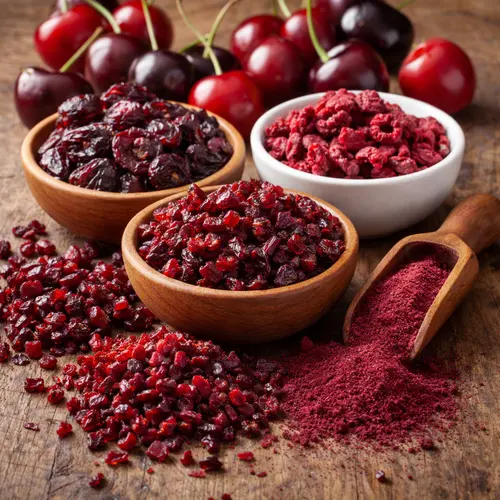
Choosing the right cherry type
Cherry selection usually starts with your target flavor and sweetness. Tart/sour cherries bring a bright, punchy cherry note that holds up in baking and balances chocolate and nuts. Sweet/bing cherries lean softer and candy-like in many dried formats—often preferred for snack mixes and milder profiles.
- Tart/Sour: brighter acidity; strong “real cherry” note; great for bars and bakery.
- Sweet: softer profile; often used in trail mixes and snack blends.
- Bing: commonly a sweet cherry reference; often associated with deep color and rich sweetness (format-dependent).
Format selection (what buyers typically choose)
Formats vary widely in texture, visual impact, and processing behavior. Choose based on your mixing method, desired chew/crunch, and packaging needs.
| Format | Typical characteristics | Often used for |
|---|---|---|
| Dried whole (pitted) | Chewy inclusion; may be infused/sweetened for consistency; sticky handling. | Trail mix, granola, cereals, bakery inclusions. |
| Diced / chopped | More uniform distribution; easier portioning; often sieve-controlled. | Bars, bites, cookies, muffins, inclusions. |
| Freeze-dried (whole/halves/pieces) | Crisp texture; strong visual; fragile (breakage into fines). | Premium toppings, cereal inclusions, snack mixes, specialty blends. |
| Powder (request-based) | Fine milling; flavor and color contribution; easy blending. | Beverage mixes, seasonings, confectionery, bakery dry blends. |
If you’re running high-speed dosing equipment, diced formats with defined sieve ranges often improve consistency and reduce line stoppages.
Common formats & options
Below are the most requested cherry options in manufacturing. Availability depends on variety, origin, season, and certification requirements.
- Dried cherries (pitted): whole or halves; chewy inclusions for mixes and bakery.
- Infused/sweetened dried cherries: commonly used for consistent sweetness and soft texture.
- No added sugar / low-sugar options (request-based): availability varies.
- Diced/chopped cherries: size-controlled for bars, cereals, and cookies.
- Freeze-dried cherries: crisp pieces for premium toppings and visual appeal.
- Cherry powder (request-based): for dry blends, beverages, and flavor systems.
Options & documentation
- Organic and conventional options (where available)
- Kosher options (request current documentation)
- COA & spec sheets for QA and receiving
- Lot traceability for production planning
- Import / export paperwork support when needed
Documentation availability can vary by origin and format—request current details with your quote.
Specs that matter (what buyers commonly define)
Cherries are purchased for flavor and premium appearance, but specs drive line performance and risk management. These are the parameters teams commonly lock in.
| Spec area | Why it matters | How to define it |
|---|---|---|
| Cherry type / variety | Changes flavor intensity, sweetness, and acidity. | Tart/sour vs sweet/bing; “bright” vs “mild” target notes. |
| Pitting expectations | Reduces consumer risk and line risk; important for ready-to-eat products. | Pitted spec + pit fragment tolerance (QA requirement). |
| Moisture & texture | Impacts stickiness, clumping, shelf behavior, and mixing. | Target moisture range; “soft chew” vs “firm bite” preference. |
| Infusion / sweetening | Controls sweetness consistency and chew texture; affects labeling. | Unsweetened vs infused/sweetened; target sweetness approach. |
| Cut size & fines (diced) | Controls distribution and reduces segregation in mixes. | Nominal size + sieve range + acceptable fines %. |
| Color / appearance | Visual consistency impacts consumer perception. | Desired color range; allowed natural variability by lot. |
| Foreign material controls | Important for audits and ready-to-eat formats. | Your QA thresholds; screening/inspection requirements. |
If you’re building a granola or trail mix, align piece sizes across inclusions (nuts, seeds, fruit pieces) to reduce separation during shipping.
Common applications
Cherries work across sweet categories—especially where you want a premium fruit note. Here are common applications and the typical format choices.
Bars & bites
- Diced cherries for even distribution
- Tart cherries for strong flavor balance
- Moisture control to prevent clumping in mixing
If you use date paste or syrups, specify moisture targets to avoid overly sticky blends.
Bakery & inclusions
- Diced or whole pitted cherries for muffins/cookies
- Infused/sweetened options for consistent chew
- Pit fragment expectations for consumer safety
For high-temperature baking, discuss format choices that reduce scorching and uneven browning.
Granola, cereal & trail mix
- Whole pitted dried cherries for premium appearance
- Freeze-dried for crisp, lightweight inclusions
- Cut size alignment to reduce segregation in bags
If you want less stickiness in mixes, ask about diced formats and coating/anti-caking options.
Packaging & handling (typical)
Dried cherries can be sticky and can clump under heat/pressure. Freeze-dried cherries are fragile and can break into fines. Packaging choice impacts line performance and delivered appearance.
- Bulk cases/cartons: common for whole pitted dried cherries.
- Bulk bags with liners: common for diced/chopped formats.
- Protective packaging: recommended for freeze-dried pieces to reduce breakage.
- Pallet configuration: helps minimize compression and clumping.
Storage considerations (general)
Storage needs vary by moisture and sweetening. Many teams preserve quality by limiting heat exposure and maintaining good FIFO discipline.
- Temperature stability: reduces clumping and stickiness in dried cherries.
- Humidity control: helps maintain texture and reduces surface tack.
- Seal integrity: close liners properly after partial use.
- FIFO & lot tracking: supports consistent production performance.
For formal storage requirements and shelf-life guidance, rely on the specific documentation and spec sheet for the lot/format you purchase.
How quoting typically works
Quotes move fastest when you specify cherry type (tart vs sweet), format (whole/diced/freeze-dried/powder), and your handling requirements.
- Choose the cherry type: tart/sour vs sweet/bing.
- Choose the format: dried whole, diced/chopped, freeze-dried, powder.
- Define key specs: pitting expectations, moisture/texture, cut size & fines.
- Share volume & destination: annual usage + delivery region (USA/Canada).
Spec builder (copy/paste)
Use this template in your quote request to reduce back-and-forth.
Cherry type: tart/sour • sweet • bing (or “either”)
Format: dried whole (pitted) • diced/chopped • freeze-dried • powder
Pitting requirement: pitted + pit fragment tolerance (if required)
Sweetening/infusion: unsweetened • infused/sweetened • low-sugar (request-based)
Target cut size / sieve (if diced):
Texture goal: soft chew • firm bite • crisp (freeze-dried)
Certifications: organic • kosher • other
Packaging: case pack/liner needs, pallet limits
Annual volume estimate:
Delivery region: USA / Canada (state/province)
If you’re unsure which cherry type fits, tell us your flavor target (“bright tart” vs “sweet snack”) and the product category (bar, bakery, mix).
Related categories
Browse categories where Cherries are commonly sourced:
Organic Dried Fruit Dried Fruit Organic Freeze-Dried Fruit Nuts & Seeds
If some category links above don’t exist on your site yet, remove them or replace them with the correct URLs.
Request a quote for Cherries (sour, sweet, bing)
Share target specs (organic/kosher), cherry type (tart vs sweet/bing), format (whole/diced/freeze-dried/powder), annual volume estimate, and delivery region (USA/Canada). If you have pitting/pit-fragment requirements, include them.
For diced formats, include target cut size and acceptable fines %. For freeze-dried, include packaging constraints to reduce breakage.
Prefer email? Send your specs to contact@atlastradehouse.com.
FAQ
Do you have minimum order quantities (MOQs)?
MOQs depend on cherry type, format (dried/freeze-dried/diced/powder), and documentation requirements (organic/kosher). Share your volume and destination and we’ll confirm MOQ and lead time options.
Which cherry type is best for bars and bakery?
Many bars and bakery items use tart/sour cherries for a brighter flavor that balances chocolate, oats, and nuts. Sweet/bing styles can be better for milder, snack-forward profiles. Tell us your flavor goal and we’ll recommend a fit.
Do you offer diced/chopped cherries?
Often yes. Provide a target cut size and acceptable fines % and we’ll propose a sieve-defined diced option for improved consistency and easier dosing.
Are dried cherries sweetened/infused?
Many commercial dried cherries are infused/sweetened to achieve consistent sweetness and soft chew. If you need unsweetened or low-sugar options, mention it in your quote request so we can confirm availability.
What documentation can you provide?
Documentation may include COAs, spec sheets, allergen statements, and lot traceability. Import/export support is available when needed. Availability varies by origin and format—request current details with your quote.
For formal storage requirements and shelf-life guidance, rely on the specific documentation and spec sheet for your requested lot/format.