Wholesale ingredient • Documentation support • Custom processing
Steel Cut Oats
Wholesale supply for Steel Cut Oats (often called pinhead oats) with consistent specs, food safety documentation, and flexible packaging for USA & Canada buyers—built for commercial kitchens, manufacturers, brands, and co-packers.
Quick sourcing summary
For the fastest quote: share your target program (organic/kosher/gluten-free if required), packaging, annual volume, and whether you need tight control of fines.
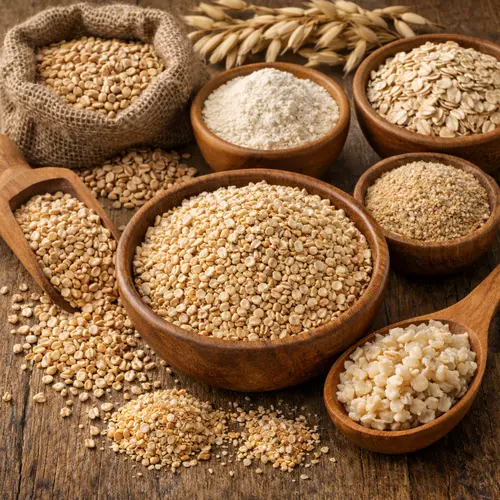
Product overview
Steel cut oats are made by cutting whole oat groats into pieces rather than rolling them into flakes. The result is a hearty, textured oat ingredient prized for its chewy bite, clean cereal flavor, and excellent hold in cooked applications. In commercial formulation, steel cut oats are often selected when you want:
- Texture differentiation: more bite than rolled oats; more “grain-like” than oat flour.
- Process resilience: holds structure in hot-hold, refrigerated, and some baked applications.
- Label simplicity: typically declared as “steel cut oats” or “oats” depending on labeling preferences.
- Versatile positioning: breakfast, savory bowls, bakery inclusions, bars, soups/stews (thickening + texture).
Buyer tip: If your process is sensitive to dust, bridging, or inconsistent hydration, ask for a program with controlled fines and specify your acceptable sieve distribution. It can make a big difference in batching and cook consistency.
Common formats (steel cut oat programs)
- Standard steel cut (typical commercial cut)
- Quick-cook steel cut (smaller cut / more surface area)
- Fine steel cut / porridge cut (for faster hydration and smoother texture)
- Custom granulation (cut size targets, sieve control)
- Blends (e.g., multi-grain bases—depending on volume)
Need a specific cook time, hydration curve, or texture? Tell us your application and we’ll recommend a cut size that matches your line conditions.
Typical applications
Options & documentation
- Organic and conventional programs (where available)
- Kosher programs (where available)
- Gluten-free programs (where available; requires program-specific documentation)
- COA + spec sheets aligned to production planning
- Lot traceability for QA and recall readiness
- Support for import/export paperwork when needed
- Private label / co-packer workflows (documentation alignment)
Documentation availability can vary by origin, supplier program, and format—request current details with your quote for the most accurate confirmation.
Specification framework (what buyers typically control)
Exact specifications depend on program and supplier. Below is a practical “buyer checklist” used in commercial oat sourcing. Share your targets and we’ll match the best-fit option.
| Cut size / granulation | Target cut, sieve distribution, and acceptable variability |
|---|---|
| Fines / dust control | Maximum fines percentage; important for dust reduction and consistent hydration |
| Moisture | Target maximum moisture for shelf stability and flow performance |
| Foreign material controls | Magnets/sieves/sorting (program dependent) and packaging integrity requirements |
| Micro targets | Program-specific microbiological criteria and testing frequency (COA-supported) |
| Allergen statement | Allergen and cross-contact statement (especially important if gluten-free is required) |
| Country of origin | Origin documentation and any required labeling alignment |
| Packaging | Case weights, liners, pallet configuration, label format (barcodes, lot format) |
If you have a vendor approval packet or spec template, paste it into the quote notes below and we’ll align the appropriate program.
Processing & formulation notes
Steel cut oats behave differently than rolled oats and oat flour. Below are practical considerations for manufacturing and large-scale foodservice.
Hydration & cook performance
- Cook time is cut-size driven: smaller cuts hydrate faster; larger cuts retain more bite.
- Batch consistency: controlling fines helps minimize thick “paste” formation and improves repeatability.
- Hot-hold: steel cut oats typically hold texture better than rolled oats during hot-hold (program dependent).
- Overnight hydration: smaller/finer cuts are often preferred for chilled/overnight products.
Where steel cut oats shine
- Hearty texture: premium mouthfeel in oat cups, bowls, and breakfast lines.
- Inclusions: adds grain identity to breads, bars, and savory products.
- Clean-label thickening: can contribute body in soups/stews while still being recognizable.
Handling on the line
- Flowability: powders bridge more than steel cut; still, fines can impact dust and flow.
- Dust mitigation: specify fines tolerance; use controlled transfer and sealed systems where possible.
- Color/aroma: oat aroma is mild; toasted applications may benefit from blending with other grains/spices.
- Storage: keep cool, dry, sealed; avoid moisture pickup and odor transfer.
Product positioning ideas
Need help choosing cut size for your product? Share your target cook time, texture goal, and process (kettle/retort/bake) and we’ll recommend a starting spec.
Quality & food safety alignment
We support commercial buyers who need documentation, traceability, and consistent specifications. Common requests include:
- COA: lot-specific results and key metrics
- Specification sheet: agreed technical parameters (cut size, moisture, etc.)
- Allergen statement: allergen and cross-contact statement (program dependent)
- Country-of-origin documentation: aligned with labeling and import needs
- Lot traceability: shipment-level documentation for QA
If you need a gluten-free program, include your documentation expectations in the quote notes so we can confirm availability before you qualify the item.
Packaging & logistics
Common bulk packaging
- Multi-wall bags with liners (palletized)
- Food-grade poly-lined cartons (program dependent)
- Custom pack sizes and labeling formats (by request)
Inbound planning details to share
- Delivery region (USA/Canada), preferred incoterms, receiving constraints
- Target lead times and seasonal demand windows
- Estimated annual volume and ordering cadence
- Warehouse requirements (appointments, pallet limits, labeling needs)
Programs, lead times, and packaging availability change—request current options with your quote for the most accurate planning details.
Related categories
Browse categories where this ingredient is commonly sourced:
Oats Grains & Seeds Plant Proteins
If you’re comparing multiple oat formats (rolled, quick oats, oat flour), tell us your application and we can recommend the most practical option.
Commonly paired ingredients
Steel cut oats are often used alongside:
- Seeds (chia, flax) for texture and nutrition positioning
- Dried fruit inclusions for oat cups and bakery products
- Plant proteins for “protein oats” and meal products
- Spices (cinnamon, vanilla) for flavor systems and blends
Building a blend? List your full ingredient set in the quote notes to coordinate sourcing and reduce purchasing overhead.
FAQ
Do you have minimum order quantities (MOQs)?
MOQs vary by program, packaging, and availability. Share your target volume, delivery region, and any program requirements (organic/kosher/gluten-free) and we’ll respond with MOQ options and lead times.
What’s the difference between steel cut oats and rolled oats?
Steel cut oats are chopped pieces of oat groats, while rolled oats are steamed and flattened. Steel cut oats typically provide a chewier, more distinct grain texture and often take longer to hydrate than rolled oats (depending on cut size).
Can you supply organic or kosher steel cut oats?
Yes—programs may be available depending on origin and supplier. Include your claim requirements in the quote request so we can confirm current availability and documentation.
Do you offer gluten-free steel cut oats?
Gluten-free programs may be available depending on supplier program and documentation. If your product requires strict gluten-free compliance, share your documentation expectations and any threshold requirements so we can align the best-fit program.
How do I choose a cut size?
Cut size typically impacts cook time, texture, and batch consistency. For faster hydration or smoother textures, a smaller cut is often preferred. For premium “hearty” bite, standard cut is common. Share your target cook time and process and we’ll recommend a starting spec.
What documents are typically available?
Common documentation includes COA, specification sheets, allergen statements, country-of-origin information, and lot traceability. Availability varies by program—request current details with your quote.
Request a quote for Steel Cut Oats
Share target specs (organic/kosher/gluten-free if required), format, annual volume estimate, and delivery region (USA/Canada). The more detail you provide, the faster we can align the right program.
Fastest quote checklist
- Cut size preference (standard/quick-cook/fine)
- Fines tolerance and dust sensitivity
- Organic/kosher/gluten-free requirements
- Packaging and labeling needs (case/pallet constraints)
- Annual volume estimate and target delivery region
Need multiple oat formats?
If you’re choosing between steel cut, rolled oats, and oat flour, list your application and processing method. We can recommend the best option for texture, cook time, and label positioning.
Browse all products Explore applications Quality & certifications
Ready to source Steel Cut Oats at scale?
Tell us your target cut size, documentation needs, packaging preferences, and volume—then we’ll align the best-fit oat program for your production requirements.