Home / Products / Seeds & Grains / Sorghum
Wholesale ingredient • Documentation support • Custom processing
Sorghum
Wholesale supply for Sorghum with consistent specifications, food safety documentation, and flexible formats for manufacturers and brands across the USA & Canada.
What is sorghum?
Sorghum is a versatile cereal grain used in food manufacturing for its mild flavor, functional starch properties, and positioning as a gluten-free grain (gluten-free labeling depends on your program and facility controls). It is used in baking, snacks, extruded products, dry mixes, and whole-grain applications.
- Mild taste: works well in both sweet and savory formulations.
- Functional starch: contributes body and structure in baked goods and extruded snacks.
- Versatile formats: whole grain, flour, meal/grits, and specialty formats depending on supply.
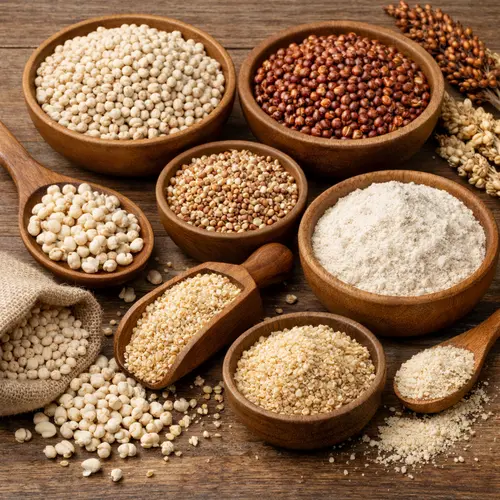
Common formats & grades
Sorghum can be specified by format and particle size to match your process (baking, extrusion, brewing, grain bowls, etc.). If you share your use case, we can align an option with the right grind, color, and performance.
- Whole sorghum grain: for cooking, grain blends, and applications where whole grain identity matters.
- Pearled / dehulled (as applicable): can reduce cook time and adjust color/texture.
- Sorghum flour: fine milled for gluten-free baking blends, batters, and dry mixes.
- Meal / grits: coarser grind for cereals, breading, and some snack applications.
- Cracked sorghum: intermediate particle size for texture-forward blends.
- Popped sorghum (specialty): snack inclusions where available (program-dependent).
- Custom milling: mesh/sieve targets and grind distribution (volume-dependent).
Need a specific particle size distribution, sieve range, or color target (white vs red/brown varieties)? Share your spec and we’ll match an option.
Options & documentation
We support vendor onboarding and QA documentation workflows for USA & Canada buyers. Documentation can vary by origin and milling/packing route.
- COA & spec sheets: common parameters include moisture, microbiological results, and physical description (mesh/grind).
- Traceability: lot documentation to support receiving and production planning.
- Organic / kosher options: request current availability and certification needs.
- Allergen statements: ingredient statements and cross-contact notes where provided.
- Gluten-free program support: available depending on facility controls; include your labeling requirements in the RFQ.
- Import / export support: documentation alignment when needed.
If your QA team has a checklist (micro targets, gluten-free thresholds, etc.), attach it to your RFQ for faster alignment.
Varieties & selection guide
Sorghum varieties can be differentiated by color and intended use. Buyers typically specify based on appearance, flavor neutrality, and how the ingredient performs in their process.
White / light-colored sorghum
- Use when: you want a neutral color and mild flavor for baking mixes and light-colored products.
- Common applications: gluten-free flour blends, crackers, tortillas/breads (blend-dependent), batters.
- Benefits: helps keep finished goods lighter in color compared to darker varieties.
Red / brown sorghum
- Use when: you want more whole-grain character and deeper color tones.
- Common applications: whole grain blends, hearty baked goods, texture-forward cereals.
- Considerations: can influence finished product color and flavor perception.
If color is critical, specify acceptable range or request a sample match where available.
Common applications
Sorghum is used across bakery, snacks, cereals, and whole grain applications. Below are typical use cases and format recommendations.
Gluten-free baking & mixes
- Flour blends: sorghum flour for structure and mild flavor in GF blends.
- Crackers & cookies: flour or meal depending on texture goals.
- Pancake/waffle mixes: flour for smooth batter performance.
- Dry mixes: predictable dosing and blending in powder systems.
If you’re targeting a specific crumb, share your flour blend and hydration approach so we can recommend the right grind.
Extruded snacks & cereals
- Puffs & crisps: sorghum meal or flour depending on extrusion parameters.
- Cereal inclusions: coarser grinds for crunch and texture.
- Snack pellets: flour/meal for forming and expansion behavior.
- Clean-label positioning: grain-forward ingredient statements.
For extrusion, share your target expansion, die size, and moisture—particle size can affect performance.
Whole grain & prepared foods
- Grain bowls: whole sorghum as a rice/quinoa alternative.
- Soup & salad kits: cooked sorghum inclusions (where applicable to your program).
- Multi-grain blends: whole grain or cracked formats for texture.
- Foodservice: bulk packs for commissaries and meal prep.
If cook time matters, ask about pearled/dehulled options where available.
Specialty / innovation
- Popped sorghum: snack mixes and inclusions (availability varies).
- Coatings: sorghum grits for crunchy coatings (application-dependent).
- Brewing/distilling inputs: format depends on your process (program-dependent).
- Blends: sorghum combined with other grains and seeds.
If you’re developing a new product, share your concept—we can suggest the most practical format to start with.
Typical quality & specification considerations
Sorghum specifications vary by origin and processing route. These are common parameters procurement and QA teams request for consistent results.
Whole grain
- Moisture: impacts storage stability and milling behavior.
- Foreign material limits: important for grain handling and food safety.
- Kernel size uniformity: affects cooking and processing consistency.
- Color: specify white vs red/brown and acceptable range if critical.
- Micro targets: aligned to your product category and risk profile.
Milled formats (flour / meal / grits)
- Mesh / sieve distribution: key driver of batter behavior, texture, and extrusion performance.
- Fines level: impacts dusting, flow, and finished product texture.
- Flowability: important for dry blending and packaging.
- Micro specs: set based on your QA program and end-use.
- Sensory: clean aroma and flavor neutrality expectations.
If you have an internal spec sheet, we can map available options to your targets.
Packaging & logistics
Packaging options depend on format and your manufacturing workflow. We can typically align bulk packaging and pallet configurations for USA & Canada buyers.
Packaging examples
- Bulk bags: common for grain, flour, and meal formats.
- Lined cartons: sometimes used for specialty grinds or co-packer formats.
- Palletized shipments: coordinated for receiving efficiency.
- Private label support: available for select projects depending on volume and format.
Share pack-size preferences and pallet constraints and we’ll confirm what’s available.
Continuity & planning
- Forecasting: annual volume estimates improve continuity and tiered pricing.
- Lot planning: align COA timing with your receiving and release process.
- Alternates: comparable varieties or grinds may be available if supply shifts.
- Call-offs: staged shipments may be possible for larger programs.
If you need monthly deliveries, include your usage profile and lead-time tolerance.
How to request pricing (fast)
Sorghum is easiest to quote when the format, grind, and compliance needs are clear. If you don’t have specs yet, share your application and we’ll recommend a starting point.
Include these details
- Format: whole grain, flour, meal/grits, cracked, or specialty.
- Variety/color: white vs red/brown; acceptable range if critical.
- Particle targets: sieve/mesh range for milled formats (if you have a spec).
- Certifications: organic, kosher, gluten-free labeling needs (if required).
- Volume: trial quantity + annual forecast.
- Delivery: destination region (USA/Canada) and receiving schedule.
What you’ll receive
- Price tiers: volume-based options and format comparisons.
- Availability notes: lead time guidance and continuity considerations.
- Documentation list: COA/spec and supporting statements where available.
- Next steps: sampling pathway (where available) and ordering workflow.
If you’re sourcing multiple grains, we can consolidate quotes into one response.
Related categories
Browse categories where this ingredient is commonly sourced:
FAQ
What’s the best sorghum format for gluten-free baking?
Sorghum flour is commonly used in gluten-free baking blends due to its mild flavor and functional starch. The best grind depends on your texture goal and blend composition—share your formula style and we’ll recommend a practical option.
Can you supply sorghum with gluten-free documentation?
Gluten-free documentation depends on facility controls and program requirements. If you need gluten-free labeling support, include the requirement in your RFQ so we can align the correct supply route and available documentation.
Do you offer organic sorghum?
Organic options may be available depending on season and origin. For best continuity, include your annual forecast and timing needs in your request.
Can you provide a specific mesh or grind?
Often, yes—depending on milling capability and volume. Provide your target sieve/mesh range (or current spec sheet) and we’ll propose available options.
Do you provide COA for each lot?
For many supply routes, COA is available per lot. Share your receiving and QA release workflow so we can confirm document timing and availability.
Request a quote for Sorghum
Share target specs (format, color/variety, grind/mesh), certification needs (organic/kosher/gluten-free labeling support), annual volume estimate, and delivery region (USA/Canada). If you’re replacing an existing ingredient, include your current spec sheet for faster matching.
Request Pricing