Home / Products / Coconut Ingredients / Shredded Coconut
Wholesale ingredient • Documentation support • Custom processing
Shredded Coconut
Wholesale supply for Shredded Coconut built for production teams—consistent specs, documentation support, and flexible formats for USA & Canada buyers across bakery, confectionery, beverage, and prepared foods.
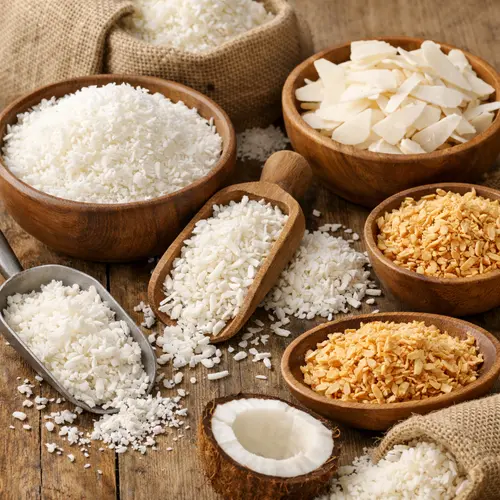
Ingredient overview
Shredded coconut is produced from mature coconut meat that is cleaned, shredded to a targeted cut, and dried to a stable moisture range. In manufacturing, it’s valued for texture, mild sweetness, fat content, and performance in baked goods, coatings, fillings, and snack systems.
- Common names: shredded coconut, desiccated coconut (cut-dependent), coconut flakes/chips (larger cuts)
- Typical appearance: white to off-white; uniform shred depending on grade; free-flowing when properly dried
- Typical profile: clean coconut aroma; lightly sweet; rich mouthfeel from natural coconut oils
- Use cases: bakery inclusions, bar coatings, confectionery, granola, dairy alternatives, prepared foods
Note: Terms like “desiccated coconut” can be used differently by region and supplier. Provide your cut size and application so we can align on the right grade.
Formats & customization
Choose the cut that best matches your product’s texture and process. If you’re replacing an existing ingredient, tell us the current grade and we’ll match it.
Shred grades
- Fine shred: smoother appearance, fast hydration; used in fillings and batters
- Medium shred: balanced texture; used in bars, cookies, inclusions
- Coarse shred: visible texture; used in toppings and artisanal applications
If you have a target sieve range or particle distribution, include it in your request.
Flakes & chips
- Flakes: wider, flatter pieces for visual impact and toppings
- Chips: larger cuts for snack mixes, granola, cluster systems
- Toasted: available upon request depending on volume and program
Toasted options can vary by color target and flavor intensity.
Processing options
- Moisture target: align to your shelf-life and flow requirements
- Sieve control: tighter distribution when your line needs consistency
- Custom blends: coconut with compatible ingredients (volume-dependent)
Custom processing depends on feasibility, volume, and lead time.
Common formats (quick list)
Need a specific cut size, sieve range, or moisture spec? Tell us what you’re making and we’ll match an option.
Typical specifications (guidance)
Specs can vary by origin, grade, and program. Use the table below as a planning guide and request the current spec sheet for your chosen option.
| Parameter | What it means for your line |
|---|---|
| Cut / grade | Defines texture and visual appearance. Fine grades integrate quickly; larger cuts perform better as toppings or inclusions. |
| Moisture | Impacts shelf life, clumping, and flow. Lower moisture improves free-flow; certain applications prefer slightly higher moisture for softness. |
| Fat (oil) content | Influences mouthfeel, richness, and flavor release. Also affects oxidation stability and storage considerations. |
| Color | White-to-off-white is typical. Toasted options are defined by color targets (light/golden/darker). |
| Micro limits | QA alignment for finished product safety. Request current limits/targets based on your program and category. |
| Foreign material controls | Screens, magnets, and process controls vary by supplier program. Share your internal requirements if you have them. |
| Allergen statement | Coconut allergen labeling requirements can differ by customer program. We provide an allergen statement where available. |
| Certifications (optional) | Organic and kosher documentation may be available depending on source and lot. Request what you need for labeling. |
Quality & documentation support
Documentation commonly requested
- COA (Certificate of Analysis): lot-linked data used for receiving and release
- Specification sheet: defines grade, typical attributes, and acceptance criteria
- Allergen statement: supports label review and allergen control plans
- Country of origin: may be needed for internal records or customer requirements
- Kosher letters / organic certificates: available where applicable
Documentation availability can vary by origin, supplier program, and format—request current details with your quote.
How we help production teams
- Spec matching: replace an existing ingredient with minimal reformulation risk
- Lot planning: align with your batch scheduling and receiving windows
- Change management: flag relevant spec shifts (grade, moisture range, packaging) when they arise
- Application fit: guidance for toppings vs. inclusions vs. fillings
If you have internal QA checklists, include them in your request to speed up approvals.
Storage & handling (general guidance)
- Store in a cool, dry area away from strong odors and direct heat sources.
- Keep packaging sealed to maintain flow and limit moisture pickup.
- Rotate inventory using FIFO; record lot codes for traceability.
- For toasted coconut, maintain tight resealing practices to protect flavor and aroma.
Applications
Shredded coconut is used for texture, flavor, and visual appeal across many product categories. Below are common patterns manufacturers use.
Bakery & bars
- Cookies, muffins, cakes, quick breads
- Protein/energy bars (inclusion or coating)
- Macaroons and coconut-forward baked items
- Granola clusters and baked toppings
Fine/medium shred often blends best into batters and dough systems.
Confectionery
- Chocolate coatings and enrobing finishes
- Truffles, bonbons, and rolled confections
- Fillings for layered sweets
- Decor/topping for visual texture
Coarse shred or flakes are typically chosen for coatings and decor.
Prepared foods & savory
- Breaded coatings and crumb systems
- Curries and coconut-forward sauces (cut-dependent)
- Snack mixes and trail blends
- Plant-based applications for mouthfeel
Chips/flakes offer visual appeal and crunch in snack systems.
Choosing the right cut (fast guide)
- Need smooth integration? Choose fine shred for uniform bite.
- Need visible texture? Choose medium or coarse for standout appearance.
- Need topping impact? Choose flakes for maximum visibility.
- Need snack texture? Choose chips for bigger pieces.
Packaging & logistics
Packaging depends on format and volume. If you have receiving constraints (dock height, pallet size, bag size limits), include them in the quote.
Bulk packaging
- Multi-wall bags or poly-lined bags
- Case packs for easier handling
- Totes for higher-volume programs (where available)
We can align packaging format to your warehouse and line feeding setup.
Freight considerations
- Palletization planning (stack height, wrap, labeling)
- Transit time coordination for production windows
- Lot consolidation when appropriate
Share your required delivery window and receiving hours if applicable.
Label & receiving
- Lot codes and date coding aligned to documentation
- Receiving paperwork and QA packet coordination
- Private label support (program-dependent)
If you require special label fields, list them upfront.
How to request a quote (fast)
The more detail you share, the more accurate your pricing and lead-time guidance will be. If you’re not sure, use the checklist below.
-
Define the format
Fine/medium/coarse shred, flakes, chips, toasted (optional). -
Share your targets
Moisture preference, certifications (organic/kosher), QA requirements. -
Confirm volume & destination
Annual estimate, shipment frequency, USA/Canada delivery region.
Quote checklist
- Format: fine / medium / coarse / flakes / chips / toasted
- Program: conventional or organic; kosher documentation needed (Y/N)
- Target moisture: if you have a limit, include it
- Packaging: bag size preference; pallets; cases vs. bulk
- Volume: per order and/or annual forecast
- Destination: city/state or province; dock constraints
- Timeline: first delivery target date
If you already have internal specs, paste them as-is. Even shorthand like “match our current medium shred” works.
Example message (copy/paste)
Use this template in your quote form or email:
Ingredient: Shredded Coconut
Format: Medium shred (or flakes/chips/toasted)
Certifications: Organic: Yes/No • Kosher: Yes/No
Targets: Moisture max: ___% • Other requirements: ____
Packaging: ___ lb bags / cases / totes (preferred)
Volume: ___ lbs per order • annual forecast ___ lbs
Delivery: USA/Canada • City/Region: ____ • Needed by: ____
Application: bars / bakery / coating / snack mix (optional)
Tip: If you’re unsure of moisture or cut specs, share your application and we’ll suggest a grade.
Request a quote for Shredded Coconut
Share target specs (organic/kosher), format, annual volume estimate, and delivery region (USA/Canada). You can also include internal QA requirements to speed up approvals.
Request Pricing Request DocumentationIf the quote form is long, prioritize: Format, Volume, Destination, and Certifications.
FAQ
Answers below are general guidance. For program-specific details, request current documentation with your quote.
What’s the difference between shredded coconut and desiccated coconut?
In many supply chains, “desiccated coconut” refers to dried coconut that can be produced in different cut sizes (fine/medium/coarse). “Shredded” is often used more broadly to describe those cuts. Because naming varies by region and supplier, your best bet is to specify the cut/grade you need.
Can you provide organic and conventional options?
Yes—where available. Tell us whether you need organic certification for labeling and we’ll share appropriate options along with documentation availability.
Do you offer kosher options?
Kosher documentation may be available depending on source and program. If kosher is required for your finished product, include it in your quote request so we can filter for qualifying options.
What information should I include to get accurate pricing?
Include format (fine/medium/coarse, flakes/chips), packaging preference, order volume and forecast, destination (USA/Canada region), and any certification/documentation needs. If you have QA requirements (e.g., moisture cap), include them upfront.
Can you match an existing spec from my current supplier?
Often, yes. Send your current spec targets (cut, moisture range, any must-have requirements), and we’ll propose comparable options and confirm documentation availability.
Do you support private label programs?
Private label support may be available depending on format, volume, and packaging needs. Share your packaging and labeling goals so we can confirm feasibility.