Wholesale ingredient • Documentation support • Custom processing
Quick Oats
Wholesale supply for Quick Oats with consistent specifications, food safety documentation, and flexible packaging and processing options for manufacturers and co-packers across the USA & Canada.
What are quick oats?
Quick oats (often called quick rolled oats) are oat flakes processed to hydrate and cook faster than old-fashioned rolled oats. They’re widely used in instant oatmeal, bakery mixes, bars, and applications where you want faster hydration and a softer finished texture.
- Fast hydration: designed to absorb water quickly—helpful for dry mixes and rapid cook systems.
- Texture control: creates a more uniform, softer oat texture compared to thicker flakes.
- Process-friendly: commonly selected for high-throughput mixing, forming, and baking lines.
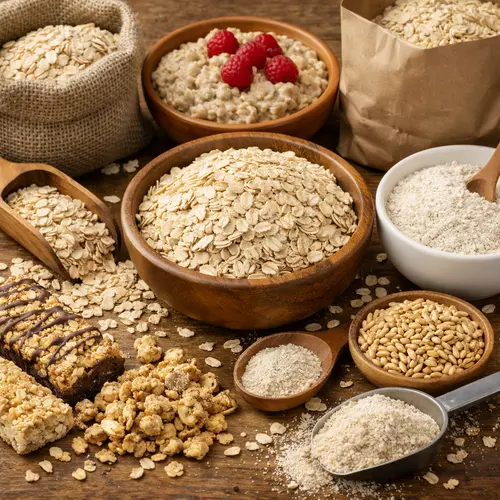
Common formats & processing options
“Quick oats” can be specified by flake thickness, flake length distribution, and how the oats behave in your process. If you share your end-use (instant oatmeal, bar, cookie, breading, etc.), we can recommend a practical spec.
- Quick rolled oats (standard): general-purpose quick oat flake for mixes and baking.
- Instant oats (finer / more processed): more rapid hydration for cup-style oatmeal and sachets (availability varies).
- Cut/flake uniformity: request tighter distribution for consistent mixing and visual appearance.
- Oat flour / oat powder (as applicable): for bakery mixes and extrusion systems where a finer grind is preferred.
- Custom blends: oats blended with seeds, dried fruit, sweeteners, proteins, or spices (volume-dependent).
- Heat treatment options: if your QA program requires specific controls, include them in your RFQ.
Need a specific hydration rate, viscosity behavior, or flake profile? Tell us your application and we’ll align the right option.
Options & documentation
We support vendor approval and documentation needs for USA & Canada buyers. Documentation varies by supply route.
- COA & spec sheets: common parameters include moisture, microbiological results, and physical description.
- Traceability: lot documentation to support receiving and production planning.
- Organic options: request organic pricing/availability where offered.
- Kosher options: where available; align to your labeling requirements.
- Allergen statements: oats are not a major allergen in the U.S./Canada, but cross-contact notes vary by facility.
- Gluten-free handling statements: available depending on the program and facility controls—request if needed.
- Import / export support: documentation alignment when required for cross-border logistics.
If your team has a supplier onboarding checklist, include it in your quote request for fastest turnaround.
Quick oats vs. old-fashioned rolled oats vs. instant oats
These oat styles differ mainly by flake thickness and processing. Choosing the right one helps control hydration time, texture, and consistency.
Quick oats
- Hydration: fast—ideal for mixes and quick cook systems.
- Texture: softer, more uniform in finished products.
- Best for: instant oatmeal style products, bars, cookies, muffins, and binding/texture support.
Old-fashioned (regular rolled)
- Hydration: slower than quick oats.
- Texture: more distinct flake definition and chew.
- Best for: granola clusters, toppings, artisan baked goods, and products where flake identity matters.
Instant oats (when offered)
Instant oats are typically processed for very rapid hydration (often finer and more fragmented). They can be useful for single-serve oatmeal, sachets, and applications requiring the shortest prep time. If you’re looking for “instant,” mention it explicitly in your RFQ so we can align the correct option.
Common applications
Quick oats are used across many categories because they hydrate easily, add body, and contribute a familiar oat texture. Below are typical manufacturing uses.
Bars, snacks & granola
- Bars: adds binding support and a uniform chew when mixed with syrups or nut butters.
- Snack clusters: helps cohesion in pressed or baked clusters.
- Granola blends: quick oats can reduce hard chew vs thicker flakes in some formulations.
- Extrusion: oat-based blends for puffs and crisps (spec depends on process).
If you have issues with crumbling or inconsistent chew, share your binder system and target water activity.
Bakery & dry mixes
- Cookies & muffins: helps distribute oat texture evenly.
- Pancake/waffle mixes: adds oat character and body.
- Breading/coatings: can be used in savory coatings for texture (application-dependent).
- Premixes: custom blends for co-packers and foodservice programs.
For mixes, tell us your packaging line (VFFS, canister, sachet) so we can consider flow and dust characteristics.
Instant oatmeal & foodservice
- Cup oatmeal: fast hydration for short prep time.
- Sachet oatmeal: consistent flake profile for predictable fill weights.
- Foodservice: bulk packs for kitchens and commissaries.
- Flavor programs: blending with dried fruit, spices, sweeteners, and inclusions.
If you need specific sodium, sugar, or inclusion ratios in a blend, share your target formula and we’ll advise feasibility.
Nutrition & better-for-you
- Fiber-forward products: oats used in clean-label positioning and satiety-focused products.
- Protein blends: oats paired with plant proteins for texture and carbohydrate balance.
- Reduced sugar approaches: oats add body and perceived sweetness in some systems.
- Labeling support: documentation can help align claims and ingredient statements.
If you have claim requirements (organic, gluten-free, etc.), include them early in the RFQ.
Typical quality & specification considerations
Specs vary by mill, origin, and program. These are common parameters procurement and QA teams request for quick oats in manufacturing.
Common spec parameters
- Moisture: influences shelf stability and flow in packaging.
- Flake profile: thickness and length distribution affects hydration and texture.
- Fines level: impacts dusting, mixing behavior, and finished texture.
- Microbiological targets: aligned to your risk profile and end-use.
- Sensory: clean oat aroma and flavor, uniform color.
Operational considerations
- Hydration behavior: important for instant systems—define time-to-softness target.
- Mixing: flake integrity matters for overmixing and breakage.
- Extrusion compatibility: may require specific grind/flake adjustments.
- Storage: keep sealed, cool, and dry to preserve freshness.
If you’re reformulating, share your existing oat spec (or a competitor code) so we can match performance closely.
Packaging & logistics
Packaging depends on your production workflow and customer type (manufacturer vs co-packer vs foodservice). We can usually align bulk packaging and palletization needs.
Packaging examples
- Multi-wall bags: common for industrial and bakery use.
- Lined cartons: possible for some programs and co-packer formats.
- Palletized shipments: coordinated for warehouse efficiency.
- Private label / co-pack: supported for select programs depending on volume.
Share your preferred pack size, pallet height limits, and warehouse receiving requirements.
Continuity & planning
- Forecasting: annual volume improves continuity and tiered pricing.
- Lot planning: align COA timing to your receiving and release process.
- Alternates: if supply shifts, we can propose comparable options.
- Call-offs: staged shipments may be possible for larger programs.
If you need monthly deliveries, include your usage profile and lead-time tolerance.
How to request pricing (fast)
Quick oats are straightforward to quote when the format and compliance needs are clear. If you don’t have final specs, share your application and we’ll recommend a starting option.
Include these details
- Oat type: quick oats (and whether you mean instant oats).
- Program needs: conventional vs organic; kosher; gluten-free handling statement if required.
- Quality targets: flake profile, fines tolerance, micro targets (if you have them).
- Volume: trial quantity + annual forecast.
- Pack preference: bags/cartons; pallet constraints.
- Delivery: destination region (USA/Canada) and receiving schedule.
What you’ll receive
- Price tiers: volume-based options and format comparisons.
- Availability notes: lead time guidance and continuity considerations.
- Documentation list: COA/spec and supporting statements where available.
- Next steps: sampling pathway (where available) and ordering workflow.
If you’re sourcing multiple oats or grains, we can consolidate quotes in one response.
Related categories
Browse categories where this ingredient is commonly sourced:
FAQ
Can quick oats replace old-fashioned rolled oats in a formula?
Sometimes, but texture and hydration will change. Quick oats hydrate faster and can create a softer texture with less distinct flakes. If you’re replacing, share your end product and process so we can recommend the closest match.
Do you offer gluten-free quick oats?
Gluten-free handling programs can be available depending on the supply route and facility controls. If you need gluten-free labeling support, include your requirements in the RFQ so we can align the right option and documentation.
What packaging sizes are available?
Packaging depends on the program (industrial vs foodservice vs co-pack). Share your preferred pack size and pallet constraints and we’ll confirm available options.
Can you supply blended oatmeal mixes?
Yes—depending on volume, we can support blends with ingredients like dried fruit, seeds, sweeteners, spices, and proteins. Provide your target formula concept and packaging format and we’ll advise feasibility.
Do you provide COA for each lot?
For many supply routes, COA is available per lot. Share your receiving and release workflow so we can confirm document timing and availability for the option you select.
Request a quote for Quick Oats
Share target specs (organic/kosher/gluten-free handling needs), oat type (quick vs instant), annual volume estimate, and delivery region (USA/Canada). If you’re replacing an existing product, include your current spec sheet for faster matching.
Request Pricing