Home / Products / Seeds & Grains / Pumpkin (Shine Skin, GWS, AA, A+, A, In-Shell)
Wholesale ingredient • Documentation support • Custom processing
Pumpkin (Shine Skin, GWS, AA, A+, A, In-Shell)
Wholesale supply for pumpkin seeds (kernels/pepitas and in-shell) with consistent specs, food safety documentation, and flexible grades for manufacturers and brands across the USA & Canada.
What we mean by “Pumpkin” here
This page refers to pumpkin seeds (often called pepitas when dehulled) and in-shell pumpkin seeds. The grade terms listed (Shine Skin, GWS, AA, A+, A) are commonly used in wholesale trade to indicate appearance, color uniformity, and defect tolerances.
- Kernels / pepitas: dehulled green pumpkin seed kernels used in baking, snacks, cereals, and toppings.
- In-shell: seeds still in the shell, commonly used for snack roasting programs and retail-style seed products.
- Grade language: suppliers may use market grade terms—your RFQ should define the targets you care about (color, size, defects, roast behavior).
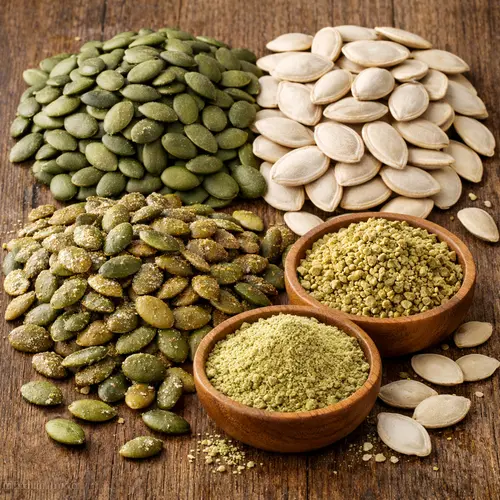
Common formats
Choose the format based on your end-use (bakery inclusion vs snack roasting vs topping) and the performance you need (color, crunch, oil release).
- Dehulled kernels (pepitas): Shine Skin / GWS / graded options (AA, A+, A).
- In-shell: snack program-friendly seed with shell intact.
- Raw: suitable for roasting, baking, and industrial processing.
- Roasted (where available): ready-to-use for toppings and snack mixes.
- Salted / seasoned (volume-dependent): custom flavor programs for brands and co-packers.
- Size sorting: screen sizing to align with visual targets and dosing equipment.
- Pieces / meal (as applicable): for inclusions, coatings, or dry blends (availability varies).
Need a specific screen size, foreign material limit, or moisture target? Share your spec and we’ll align the right option.
Options & documentation
We support vendor approval and QA documentation flows for USA & Canada buyers. Availability depends on origin and processor.
- COA & spec sheets: typical parameters include moisture, microbiological results, and quality/defect tolerances.
- Traceability: lot documentation to support receiving, QA release, and production planning.
- Organic / kosher options: request current availability if needed for labeling.
- Allergen documentation: ingredient statements and cross-contact notes where provided.
- Import/export support: documentation alignment for cross-border and distribution needs.
If you have a supplier onboarding checklist, include it in your RFQ for faster setup.
Grade guide (how buyers typically specify)
Grade terms can vary by market and supplier, so the most reliable approach is to define measurable and visual targets. Below are the most common ways buyers specify pumpkin seed kernels and in-shell programs.
Kernels / pepitas
- Color target: bright green vs darker green; uniformity requirements.
- Appearance: “shine skin” is often requested when a glossy look is preferred for premium toppings.
- Defect tolerances: broken kernels, discolored seeds, plant matter, and foreign material limits.
- Size / count: screen sizing or count-per-100g style targets (when used).
- Roast behavior: color development, crunch, and oil release during roasting.
If your spec uses AA/A+/A, share what those grades mean in your system (or send your current spec sheet) so we can match consistently.
In-shell
- Seed size: screen sizing for consistent roasting and consumer experience.
- Moisture: impacts roasting consistency and shelf stability.
- Shell integrity: broken shells and fines tolerance for snack programs.
- Cleaning level: plant matter and dust expectations.
- Seasoning compatibility: salt adhesion and seasoning retention requirements (for flavored SKUs).
For snack programs, tell us your roasting style (dry roast vs oil roast) and target salt %.
Common applications
Pumpkin seeds are used for crunch, visual appeal, and nutrition positioning. Choose grade and format based on where the seed is visible and how it’s processed.
Bakery, cereal & toppings
- Bread & rolls: topping seeds with consistent size for even coverage.
- Granola & cereal: inclusions that maintain crunch and color through processing.
- Salads & bowls: roasted kernels for ready-to-eat topping applications.
- Bars & bites: kernels as inclusions for texture contrast.
If the seed is highly visible (toppings), buyers often request higher visual grades to reduce discoloration and improve uniformity.
Snacks & retail-style programs
- In-shell roasted snacks: salted or seasoned programs using in-shell seeds.
- Trail mixes: roasted kernels for crunch and flavor.
- Seasoned pepitas: custom flavors for brand SKUs (volume-dependent).
- Coated snacks: spicy/sweet coatings and inclusions (processing-dependent).
Share your target flavor profile and packaging format (pillow bag, canister, etc.) so we can align the best processing and pack options.
Typical quality & specification considerations
Pumpkin seed specifications vary by origin and processor. Below are the most common parameters procurement and QA teams request for repeatable performance.
Common spec parameters
- Moisture: affects crispness, shelf stability, and roasting consistency.
- Microbiological targets: aligned to your risk profile and product category.
- Foreign material limits: particularly important for kernels and in-shell programs.
- Defects: broken kernels, discolored seeds, shells/hull fragments, and fines tolerances.
- Sensory: clean seed aroma, neutral taste (raw), and expected roast flavor development.
Process & handling notes
- Roast performance: grade and moisture influence color and crunch after roasting.
- Oil release: can vary—important for coatings and roasted programs.
- Storage: keep sealed, cool, and dry to reduce oxidation and preserve freshness.
- Food safety: share if you require heat-treated or validated process controls.
If you’ve had issues with rancidity, inconsistent roast color, or excessive fines, share details—we can recommend a different grade or spec target.
Packaging & logistics
Packaging options depend on raw vs roasted and kernel vs in-shell. We can typically align bulk formats for manufacturers and co-packers.
Packaging examples
- Bulk bags: common for kernels and in-shell programs.
- Lined cartons: used for some cleaned kernels and specialty packs.
- Palletized shipments: coordinated for efficient receiving and production staging.
- Private label support: available for select snack/retail programs (volume-dependent).
Share pack size preferences and pallet constraints so we can align what’s available.
Continuity & planning
- Forecasting: annual volume estimates improve price tiers and continuity.
- Lot planning: align COA timing with your receiving and QA release process.
- Alternates: we can propose comparable grades if availability shifts.
- Call-offs: staged shipments may be available depending on volume.
If you need a safety stock plan, include monthly usage and lead-time tolerance.
How to request pricing (fast)
Pumpkin seeds can be quoted quickly when the grade and end-use are clear. If you’re not sure, share your application and visual targets and we’ll recommend a starting spec.
Include these details
- Type: kernels (pepitas) or in-shell.
- Grade preference: Shine Skin / GWS / AA / A+ / A (or your internal definition).
- Processing: raw vs roasted; salted/seasoned requirements.
- Size: screen size or visual target; acceptable fines level.
- Certifications: organic, kosher, other labeling needs.
- Volume: trial quantity + annual forecast.
- Delivery: destination region (USA/Canada) and receiving schedule.
What you’ll receive
- Price tiers: format/grade comparisons and volume-based options.
- Availability notes: lead time guidance and continuity considerations.
- Documentation list: COA/spec and supporting statements where available.
- Next steps: sampling pathway (where available) and ordering workflow.
If you’re sourcing multiple seeds, we can consolidate quotes into one response.
Related categories
Browse categories where this ingredient is commonly sourced:
FAQ
Should I choose kernels or in-shell?
Use kernels (pepitas) for inclusions and toppings where you want a green seed and easy eating. Use in-shell for snack roasting programs and retail-style “crack & eat” products.
What’s the best grade for salad toppers and premium bakery toppings?
Many brands choose higher visual grades (often marketed as Shine Skin / premium green kernels) for toppers, because color uniformity and low defect rates matter most when the seed is visible. Share your target color and acceptable defect tolerance so we can recommend a practical option.
Can you provide roasted and salted options?
Depending on volume and supply route, roasted and salted/seasoned options can be supported. Include your roast style, salt %, and flavor direction so we can align a format that performs in your packaging.
Do you provide COA for each lot?
For many supply routes, COA is available per lot. Share your receiving and release workflow so we can confirm document timing and availability for the option you select.
What if I’m not sure what “AA / A+ / A” means in my spec?
Send your current spec sheet or a photo of your existing product label and we’ll map the closest equivalent option. Grade language can vary by supplier, so aligning on measurable targets (color, size, defects) is the fastest way to ensure consistency.
Request a quote for Pumpkin (Shine Skin, GWS, AA, A+, A, In-Shell)
Share your target type (kernels vs in-shell), grade preference (or your internal spec), raw vs roasted requirements, annual volume estimate, and delivery region (USA/Canada). If you’re replacing an existing item, include your current spec sheet for faster matching.
Request Pricing