Home / Products / Freeze-Dried Vegetables & Herbs / Peas
Wholesale ingredient • Documentation support • Custom processing
Peas
Wholesale supply for Peas with consistent specifications, food safety documentation, and flexible formats for USA & Canada buyers. We support manufacturers, brands, and co-packers with pea ingredients designed for dry blends, soups, seasonings, meal kits, and shelf-stable prepared foods.
At a glance
Common end uses
- Instant soups, ramen cups, and dry broth blends
- Meal kits and ready meals (freeze-dried inclusions)
- Seasoning blends and savory coatings
- Snack inclusions (crunchy, lightweight pieces)
- Dry mixes (dips, sauces, savory baking blends)
Typical buyer priorities
- Uniform particle size / low fines
- Color retention and appearance consistency
- Moisture/aw targets for shelf stability
- Rehydration performance (time and texture)
- Packaging that protects from humidity and breakage
If you have a target spec sheet or inclusion blend formula, share it—our team can propose grades and sieve ranges that match your line performance.
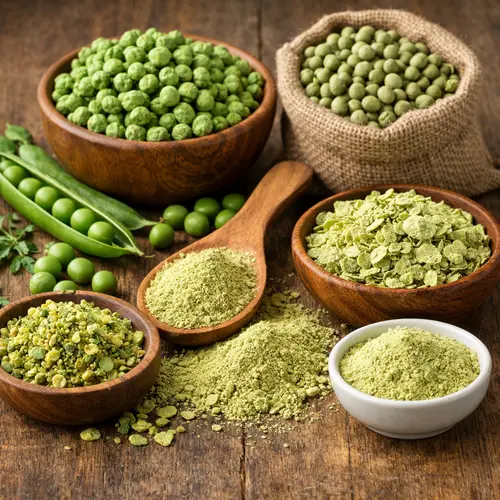
Formats we commonly supply
Pea ingredients are often purchased for dry, shelf-stable applications. The right format depends on your use-case: visual inclusion vs. flavor contribution vs. functional thickening. Below are common wholesale options. Availability varies by origin and season.
Freeze-dried pea formats
- Freeze-dried peas (whole) for premium visual inclusions
- Freeze-dried pea pieces for reduced breakage and better distribution
- Freeze-dried pea crumble for soups and meal kits
- Freeze-dried pea powder (program dependent) for dry flavor systems
Freeze-dried peas are valued for lightweight shipping, fast rehydration, and strong color retention (depending on processing).
Dehydrated pea formats
- Dehydrated peas for soups, blends, and shelf-stable products
- Pea flakes for fast rehydration and smooth mouthfeel
- Pea grits / granules for controlled inclusion sizing
- Pea powder for thickening, flavor, and dry blends
Dehydrated formats can be a cost-effective choice for high-volume soup, seasoning, and prepared-food applications.
Particle sizing & customization
- Custom sieve ranges (to control fines and improve blend uniformity)
- Piece sizing to match other inclusions (carrot, corn, onion, herbs)
- Low-dust options for seasoning lines and packaging operations
- Moisture/aw targets aligned to shelf-life requirements
If you’re building a “vegetable blend” inclusion, tell us the companion ingredients and target ratios—we can help you match sizing.
Common blend companions
- Carrot, corn, onion, bell pepper
- Parsley, chive, dill, celery leaf
- Mushroom, tomato, spinach (format dependent)
- Seasoning bases (salt, yeast extract, spices)
Ask about custom blends and co-packing support depending on ingredient set and volume.
Performance considerations (what impacts your finished product)
In dry applications, performance is often about rehydration speed, texture retention, and how well peas integrate into your blend without crushing. If you share your process (mixing, filling, hot water reconstitution), we can suggest the most suitable grade.
Rehydration behavior
- Time-to-hydrate: critical for instant cups and quick-serve meals
- Texture: tender vs. firm bite depending on application
- Particle size: smaller pieces hydrate faster; larger pieces can offer better visuals
- Heat exposure: higher temperatures typically improve rehydration but may affect texture
For instant products, provide your target “ready time” (e.g., 3–5 minutes) so we can match a suitable cut.
Color, breakage & blend uniformity
- Color: influenced by raw material quality and processing method
- Breakage resistance: important for high-speed augers and vertical form-fill-seal lines
- Fines/dust: impacts blend uniformity, seasoning adhesion, and pack weight consistency
- Density matching: helps prevent segregation in mixed vegetable blends
If you’re seeing segregation in your inclusion blend, ask about particle sizing alignment across ingredients.
Specification support for QA & receiving
We support common documentation workflows so your QA team can approve ingredients quickly and your production schedule stays on track. Documentation availability may vary by origin and format—request current details with your quote.
Common documents (by request)
- Certificate of Analysis (COA) by lot
- Specification sheet (physical/chemical/micro targets)
- Country of origin details
- Allergen statement
- Lot traceability and packing details
- Program documents where applicable (organic/kosher)
If your company has a supplier onboarding packet, send it and we’ll help map required documents.
Spec items you can define (typical)
- Format: freeze-dried vs. dehydrated; whole, pieces, flakes, granules, powder
- Particle size: sieve range targets to control fines
- Moisture/aw: aligned to shelf-life and blend stability
- Defects/foreign material: thresholds and inspection expectations
- Micro targets: aligned to your internal QA program
- Packaging: bag type, case counts, pallet configuration
If you already have a spec sheet, include it with your RFQ so we can match a grade precisely.
Packaging, logistics & planning
Dry vegetables are sensitive to humidity and mechanical damage. Packaging and pallet configuration can impact receiving speed, storage stability, and the amount of breakage you see at production.
Common wholesale packaging
- Multi-wall bags (common for dehydrated peas and granules)
- Cartons/cases (often used for freeze-dried pieces to reduce crushing)
- Pallet labeling aligned to traceability workflows
- Program packaging for private label (where applicable)
Tell us your preferred case count, pallet height limits, and warehouse handling method (forklift vs. manual pick).
Storage & handling (general)
- Store cool and dry; keep away from direct humidity sources
- Keep bags/cases sealed until use to protect texture
- Use FIFO rotation to maintain color and sensory quality
- Minimize crushing by limiting over-stacking and rough handling
If you need a specific shelf-life target or storage statement, request it with your documentation set.
Options: organic, kosher, and custom blends
Depending on origin and format, we may be able to quote organic and/or kosher pea options. We can also support custom blends (e.g., pea + carrot + corn + onion) based on ingredient availability and volume.
Organic & certification programs
- Organic options where available (format/origin dependent)
- Kosher options where available
- Documentation alignment to your QA onboarding process
- Repeat purchasing support for planned volume programs
For program quotes, include expected monthly/quarterly usage and your timeline.
Custom blends & processing
- Matched particle sizing across ingredients to reduce segregation
- Custom sieve ranges to manage fines
- Blend ratio guidance for consistent pack appearance
- Program-dependent co-packing and private label support
Share your target blend formula and packaging format (pouches, cups, tubs) and we’ll advise on inclusion sizing.
Request a quote for Peas
Share target specs (organic/kosher), format, annual volume estimate, and delivery region (USA/Canada). Adding the details below helps us return accurate pricing and suitable grade options faster.
Include product requirements
- Format: freeze-dried or dehydrated; whole/pieces/flakes/granules/powder
- Target particle size or sieve range (if applicable)
- Moisture/aw targets (if you have requirements)
- Intended application (soups, cups, seasonings, meal kits)
- Any micro/defect thresholds your QA team requires
Include commercial details
- Annual volume (or monthly usage)
- Ship-to state/province and receiving constraints
- Packaging preference (bags/cases; pallet requirements)
- Timeline: spot buy vs. ongoing program
- Company type: manufacturer/brand/co-packer/distributor
Prefer email? Send your requirements to contact@atlastradehouse.com.
Related categories
Browse categories where this ingredient is commonly sourced:
Freeze-Dried Vegetables & Herbs Dehydrated Vegetables Vegetable Powders
FAQ
What pea formats do you supply for manufacturing?
Common formats include freeze-dried peas, dehydrated peas, pea flakes, pea granules, and pea powder (format availability varies by origin and processing). We can also discuss custom sieve ranges and cut sizes for seasoning, soup, and meal kit applications.
Are organic and kosher pea options available?
Where available, we can quote organic and/or kosher options. Availability depends on crop cycle, origin, and processing format.
Do you provide COAs, spec sheets, and lot traceability documents?
Yes. Typical documentation includes COA by lot, specification sheets, country of origin details, allergen statements, and lot traceability. Additional documentation may be available by request depending on supplier and format.
Do you have minimum order quantities (MOQs)?
MOQs depend on the ingredient format, packaging, and destination. Share your target volume and ship-to region (USA/Canada) and we’ll provide options.
Can you help if I’m building a mixed vegetable inclusion blend?
Yes. Share the companion ingredients (carrot/corn/onion/herbs), your target ratios, and the packaging format. We can recommend matched sizing to reduce segregation and improve pack appearance.
Why manufacturers source pea ingredients with Atlas Global Trading Co
Our sourcing approach is built for production realities: consistent specs, responsive communication, and documentation support that helps QA teams approve ingredients quickly.
Built for repeat purchasing
- Spec alignment and substitution guidance when markets shift
- Lot-level documentation support for receiving and traceability
- Planning support for ongoing volume programs
- Clear communication around lead times and packaging
Serving USA & Canada
- Bulk and wholesale formats for manufacturers, brands, and co-packers
- Custom sieve ranges and processing options (where available)
- Support for import/export paperwork when needed
- Responsive sourcing team for RFQs and documentation