Home / Products / Freeze-Dried Vegetables & Herbs / Green Beans
Wholesale ingredient • Documentation support • Custom processing
Green Beans
Wholesale supply for Green Beans with consistent specs, food safety documentation, and flexible formats for USA & Canada manufacturers, brands, and co-packers.
At a glance
- Ingredient: Green Beans (vegetable ingredient; freeze-dried and dried formats)
- Buyer types: soup & meal producers, seasoning and blend manufacturers, snack brands, emergency/ration suppliers
- Best-fit uses: instant soups, cup meals, dry mixes, vegetable blends, snack coatings, powdered formulations
- Services: format matching, spec alignment, documentation support, sourcing continuity for production schedules
Product overview
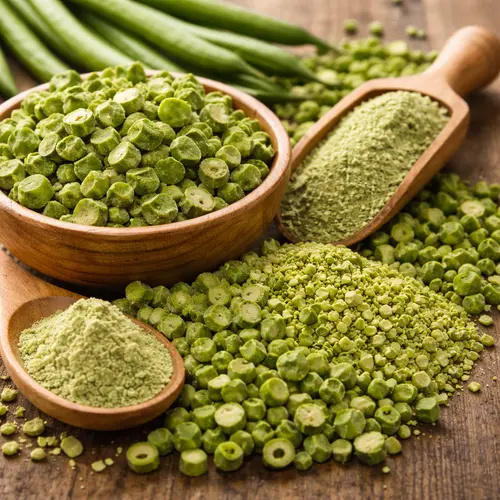
Green beans are a versatile vegetable ingredient used for color, texture, and recognizable “real-vegetable” identity in dry formulations. Depending on the processing method and cut, green beans can deliver quick rehydration for instant soups and cup meals, or controlled particle size for blends and powders.
Common applications
- Instant soups & cup meals: quick rehydrating pieces for consistent bowl appearance
- Dry meal kits: vegetable blends for rice, pasta, and stew mixes
- Seasoning and culinary blends: granules or powders for uniform distribution
- Snack and topping inclusions: crunchy freeze-dried pieces where a crisp bite is desired
- Institutional / emergency supply: shelf-stable vegetable ingredients for long-life packs
- Co-packer formulations: controlled particle size to reduce segregation and improve line flow
If your application is sensitive to hydration time, dust, or particle segregation, include those constraints in your quote request.
Formats we can quote
Formats vary by origin and program. If you’re not sure which is best, tell us what you’re making and we’ll recommend a direction.
- Freeze-dried pieces: lightweight, crisp; fast hydration; great visual identity
- Freeze-dried slices / cuts: controlled geometry for consistent portioning
- Diced / chopped: common for soups and mixes; typically defined by size range
- Granules: smaller particles for even distribution in blends and sachets
- Powder: for seasoning blends, functional mixes, and where a smooth texture is needed
Customization examples
- Cut size targets: small/medium/large cuts based on your mix and packaging format
- Sieve range: coarse vs. fine granules/powder for flow and distribution
- Blend support: vegetable medleys (volume dependent) for “one-SKU” purchasing
- Dust management: choosing cut/handling steps to reduce fines where needed
Share your mixing method and packaging type (sachets, tubs, pouches) so we can align a spec.
Freeze-dried vs. dried (dehydrated): how buyers choose
Buyers typically decide between freeze-dried and dehydrated/dried formats based on hydration behavior, texture, visual impact, and cost targets.
- Freeze-dried: crisp texture, strong visual appeal, fast hydration, low density
- Dried/dehydrated: denser pieces, often more economical, different hydration curve
- Granules/powders: best for uniform distribution and consistent flavor/vegetable notes in blends
If your product uses hot-fill water (cups) vs. simmering (kettle), tell us—rehydration expectations can differ by process.
Performance considerations for formulators
These are common engineering and QA discussion points when selecting a cut, especially for soups, dry mixes, and blends.
- Hydration time: target minutes-to-eat for cup meals vs. longer simmer formats
- Particle segregation: aligning density and particle size with the rest of the blend
- Fines/dust: important for sachet packing accuracy and clean label presentation
- Visual piece count: consistency in serving appearance (especially retail products)
- Process stress: mixing intensity and drop height can impact breakage
- Packaging: moisture barrier needs for crisp freeze-dried pieces
Typical spec discussion points
To accelerate quoting and QA review, it helps to define the “spec shape” you need. The items below are commonly reviewed during vendor approval and incoming QA checks.
- Format & cut definition: pieces/slices/dice/granules/powder + target size range
- Moisture sensitivity: guidance for storage and handling in your facility
- Foreign matter controls: screening, magnets, metal detection (as applicable)
- Micro expectations: lot COAs and micro summaries where available
- Allergen handling: allergen statement and facility disclosures (supplier dependent)
- Sensory profile: color/appearance targets and typical aroma notes
- Packaging: bulk packout and pallet configuration preferences
If you’re matching an incumbent ingredient, send your current spec sheet and we’ll target the closest equivalent.
Options & documentation support
We support manufacturers and brands with documentation that helps streamline onboarding, QA approval, and production planning. Document availability can vary by origin and program; we confirm current documents during quoting.
- Specification sheet: format, description, typical use, handling guidance
- Certificate of Analysis (COA): lot-specific verification and traceability references
- Allergen statement: supplier declarations (facility handling dependent)
- Country of Origin (COO): for labeling support and internal compliance
- Lot traceability: to support receiving and batch record requirements
Optional / program-dependent documents
- Organic certificate: where certified organic supply is selected
- Kosher letter: where kosher program coverage exists
- Non-GMO statement: when required by your customer/spec
- Micro/pesticide summaries: where available by origin/program
Share your vendor approval checklist and we’ll align what’s available.
Packaging & logistics (typical)
Packaging and palletization vary by supplier and format. We’ll propose the best-fit packout for your volume and receiving needs.
- Bulk packaging: common options include lined cartons or food-grade bags
- Labeling: lot IDs and traceability markers for QA release
- Palletization: configured to support warehouse receiving and production staging
- Sampling: commercial sampling options may be available (ask during quoting)
Storage notes (operations-friendly)
- Keep sealed: especially for freeze-dried pieces to protect texture
- Dry environment: reduces clumping for granules and powders
- Odor control: store away from strong aromas to prevent transfer
Lead times & supply planning
Lead times depend on format, certification, and inventory positioning. When you share your delivery region (USA/Canada), we can recommend planning assumptions and options for continuity.
- Forecasting: share monthly/quarterly run rates to support steady supply
- Seasonality: we can discuss risk mitigation (format flexibility, buffer stock)
- Lot planning: align production windows, COA release, and receiving schedules
- Alternatives: if a cut tightens, we can propose near-equivalent options
If your timeline is tied to a production slot, include the date and we’ll prioritize feasible options.
How buyers specify Green Beans (examples)
These examples show how purchasing teams describe needs. Use them as a template to speed up your quote.
Example A: Cup soup pieces
- Format: freeze-dried pieces
- Use: instant cup soup
- Performance: quick hydration target
- Volume: annual estimate + first shipment
- Docs: spec sheet, COA, allergen, COO
Example B: Blend granules
- Format: granules (coarse)
- Use: dry meal kit blend
- Notes: minimize segregation with other ingredients
- Volume: monthly run rate
- Docs: COA per lot
Example C: Powder for seasoning
- Format: powder (fine)
- Use: seasoning/culinary blend
- Handling: dust control considerations
- Volume: quarterly forecast
- Docs: spec sheet, COA, allergen statement
Related categories
Browse categories where this ingredient is commonly sourced:
Freeze-Dried Vegetables & Herbs Dehydrated Vegetables Vegetable Powders Vegetable Blends
If you don’t see the exact cut you need (e.g., small dice vs. slices, coarse vs. fine powder), request a quote and include your target size range and application.
FAQ
Do you have minimum order quantities (MOQs)?
MOQs vary by format, certification, and packaging. Tell us what you need and your delivery region (USA/Canada) and we’ll reply with options.
Can you quote organic and conventional?
Yes. Where available, we can quote both so you can compare cost, labeling requirements, and supply continuity.
Do you offer freeze-dried and dehydrated options?
Often, yes—depending on sourcing lanes. Freeze-dried options typically emphasize quick hydration and crisp texture; dehydrated options may be a better fit for cost targets and certain cook profiles.
What documents can you provide?
Common documents include spec sheets, lot COAs, allergen statements, and country-of-origin statements. Additional certifications (organic/kosher) may be available depending on the selected program.
How do I request a fast, accurate quote?
Include: format/cut, organic/kosher preference, expected annual volume (or monthly run rate), delivery region, and any must-have QA documents.
Request a quote for Green Beans
Share target specs (organic/kosher), preferred format, estimated annual volume, and delivery region (USA/Canada). If you’re matching an existing ingredient, attach your spec sheet or paste key requirements into your message.
What to include
- Format: pieces / slices / diced / granules / powder
- Program: organic, kosher (if required)
- Volume: annual estimate + first shipment quantity
- Delivery: USA/Canada region + preferred Incoterms if known
- Docs: COA/spec/allergen/COO + additional QA requirements
Fast actions
Request Pricing View Quality & Certifications
If you’re quoting multiple vegetables (e.g., mixed veg blends), list everything you need and we’ll bundle options where possible.
Note: Specifications, documentation, and availability depend on origin, seasonality, and processing format. We confirm current details during quoting.