Home / Products / Freeze-Dried Vegetables & Herbs / Corn
Wholesale ingredient • Documentation support • Custom processing
Corn
Wholesale supply for freeze-dried corn with consistent specs, food safety documentation, and flexible cut sizes for manufacturers and brands in the USA & Canada.
Fastest quote: share cut size, target % fines, moisture/texture preference, required certifications, packaging format, annual volume, and ship-to region.
Overview
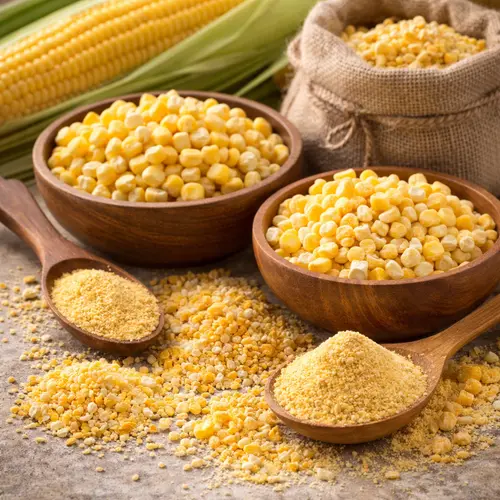
Freeze-dried corn delivers concentrated corn flavor, bright color, and fast rehydration with low added processing. It’s widely used in dry blends and ready-to-eat applications where you need vegetable character without adding significant water during manufacturing. Buyers commonly choose freeze-dried corn for soup mixes, seasoning blends, instant meals, snack inclusions, and premium garnishes.
- Fast rehydration: rehydrates quickly in hot water systems
- Lightweight ingredient: helps reduce shipping weight compared to wet formats
- Color & identity: visible kernels/dices in dry mixes and finished products
- Convenient processing: easy to dose into blends and formulations
For moisture-sensitive finished products, it’s important to define acceptable moisture pickup and packaging requirements. Tell us your use case and we’ll recommend a practical spec target to quote.
Who buys freeze-dried corn
We support manufacturing and co-packing teams that need consistent cut sizes, documentation, and repeat supply programs.
Fast quote checklist
- Format: kernels / dices / granules / powder
- Cut range: sieve range or dimensional target + % fines
- Micro requirements: if your program is RTE or retail-driven
- Certifications: organic / kosher (where needed)
- Packaging: bulk case, lined carton, moisture barrier, etc.
- Volume: trial + annual forecast
Common end uses
- Instant soups, ramen cups, meal kits
- Dry spice & seasoning blends
- Snack inclusions and toppings
- Camping / outdoor meals
- Ready-to-eat dry mixes (retail)
What buyers optimize
- Cut size uniformity
- Low fines/dust for blending lines
- Color consistency
- Rehydration behavior
- Micro targets & documentation
Documentation support
- Specification sheets
- Lot COAs
- Allergen statements
- Origin / traceability
- Certificates where applicable
Formats & cut sizes
Freeze-dried corn is commonly specified by cut size and sieve range. If you have a target screen size or a reference sample, include it in your quote request so we can match options quickly.
Whole kernels (where available)
- Best for: visible vegetable identity in soups and meal kits
- Optimize: consistent kernel size and minimal breakage
- Notes: availability depends on processing and program
If you need a “premium look,” kernels or larger cuts are often preferred over granules.
Dices
- Best for: balanced visibility and blend uniformity
- Optimize: tight cut-size window and low fines
- Notes: common for cup meals and dry soup blends
Granules
- Best for: seasoning blends and formulations needing smaller particles
- Optimize: sieve range and flow characteristics
- Notes: useful when you want even distribution without large inclusions
Powder
- Best for: flavor contribution and color without visible pieces
- Optimize: fineness, flow, and dust management
- Notes: often used in seasoning bases and soup powders
If your line is sensitive to dust, ask about packaging and handling best practices for powders.
Custom processing (program-dependent)
Sieve ranges & low-fines
- Target screen range (example: “between X and Y mesh”)
- % fines/broken pieces limits for premium blends
- Dust reduction goals for automated blending
Blends & multi-veg mixes
- Vegetable blend programs for meal kits and soups
- Custom ratios for “signature” blends
- Co-packer-friendly packaging formats
Customization depends on volume, supplier capabilities, and validation requirements. Send your spec and target annual volume to confirm feasibility.
Typical specification parameters (buyer checklist)
Specs vary by origin and program. The checklist below reflects common parameters buyers align on for freeze-dried corn. We’ll provide the actual specification sheet and lot COA for the offered product.
| Parameter | Why it matters | What buyers commonly specify |
|---|---|---|
| Cut size / sieve range | Controls distribution, visual identity, and portion consistency. | Target range; max overs/unders; % fines. |
| Moisture / water pickup | Affects crispness, flow, and shelf stability. | Target moisture window; packaging moisture barrier needs. |
| Color / appearance | Impacts finished product perception. | Acceptable color range; limits on browning/discoloration. |
| Rehydration behavior | Important for cup meals and instant applications. | Target rehydration time/texture (application-specific). |
| Foreign material control | Critical for food safety and customer requirements. | Screening/sorting approach; acceptance limits. |
| Micro (as applicable) | Required for many retail and RTE programs. | Micro limits aligned to your category and customer needs. |
| Allergen statement | Supports labeling and facility controls. | Allergen matrix and cross-contact declarations. |
| Origin & traceability | Supports procurement and QA approval. | Country of origin; lot traceability fields. |
| Certifications | Needed for claim support and some customers. | Organic/kosher certificates where applicable. |
Common buyer requirements
- Consistent sieve range for uniform mixing
- Low fines/dust for automated blend lines
- Color consistency across lots
- Defined micro targets for retail programs
What to include if you have an internal spec
- Format + target sieve range and max % fines
- Moisture limits and packaging requirements
- Micro limits required by your customer/retailer
- Documentation list (spec + COA + allergen + certs)
- Annual volume forecast and target ship date
Applications & usage notes
Freeze-dried corn is used when you need corn flavor and identity in dry formats with quick rehydration performance. Below are common applications and what buyers typically optimize for.
Instant soups & cup meals
- Goal: visible pieces + fast rehydration
- Optimize: cut size consistency and texture after rehydration
- Note: confirm rehydration time aligned to your consumer prep instructions
Seasoning blends & dry mixes
- Goal: distribution and flavor
- Optimize: granule/powder size for even blending
- Note: low fines may improve line cleanliness and reduce dust
Snack inclusions & toppings
- Goal: color pop + crunch (depending on format)
- Optimize: particle integrity and breakage control
- Note: manage humidity exposure to maintain texture
Prepared foods & meal components
- Goal: ingredient identity without wet handling
- Optimize: cut size and rehydration behavior in your process
- Note: define addition step (pre-hydrate vs in-process hydration)
R&D and scale-up
Trial guidance (practical)
- Test multiple cuts (dices vs granules) to confirm visual and texture targets
- Validate rehydration time in your actual process (water temp and dwell time matter)
- Measure fines generation during blending (especially for long run times)
Spec lock for repeat runs
- Define acceptance ranges for sieve size and % fines
- Confirm micro limits needed for your customer/retailer
- Align packaging requirements to reduce moisture pickup during storage
If you tell us your application (cup meal, seasoning blend, snack inclusion), we can recommend a cut size that’s commonly used in that category.
Quality & documentation support
We help procurement and QA teams with documentation needed for receiving, approvals, and production planning. Documentation availability depends on supplier and program—request current details with your quote.
Common documentation
- Specification sheet (cut size range, moisture, appearance, etc.)
- COA per lot (lot-level results)
- Allergen statement (incl. cross-contact declarations)
- Country of origin and traceability details
- Certificates (organic/kosher where applicable)
How we help you move faster
- Align must-have parameters before booking
- Confirm packaging and case packs for your workflow
- Support lot traceability for production scheduling
- Discuss program continuity for repeat supply
If your QA team has a vendor questionnaire, attach it with your inquiry so we can streamline approval.
Handling & storage notes
Freeze-dried ingredients are sensitive to humidity. A strong moisture barrier and good warehouse practices help maintain crispness, color, and flow.
Warehouse best practices
- Store sealed packaging in cool, dry conditions
- Keep away from strong odors (freeze-dried items can absorb odors)
- Use FIFO inventory rotation and track lot numbers
- Re-seal promptly after opening to reduce moisture pickup
Production line tips
- Minimize open-air exposure time (especially in humid rooms)
- Consider staged dispensing to avoid moisture uptake during long batches
- For powders, use dust control and sealed transfer where possible
- Confirm screen integrity to manage fines in blending
If your facility is humid, ask about packaging formats and handling routines that reduce moisture pickup.
FAQ
Questions we hear often from manufacturers and brand buyers.
What formats of corn do you supply?
We can source freeze-dried corn in common formats such as whole kernels (where available), dices, granules, and powder. Availability depends on origin, seasonality, and volume.
Can you support custom sieve ranges or low-fines requirements?
Depending on supplier capabilities and volume, custom sieve ranges, low-fines targets, and cut-size specifications may be available. Share your acceptance limits and application so we can confirm feasible options.
Do you have minimum order quantities (MOQs)?
MOQs depend on cut size, packaging, and whether you need organic/kosher options. Send your target volume and ship-to region and we’ll reply with MOQ and price breaks.
Can I request organic and conventional pricing?
Yes. Where available, we can quote organic and conventional options so you can compare cost, lead time, and labeling requirements.
What documentation can you provide?
Common documentation includes specification sheets, lot COAs, allergen statements, and country of origin information. Certificates (organic/kosher) can be provided where applicable and available—confirm current status with your quote request.
How should freeze-dried corn be stored?
Store sealed packaging in a cool, dry environment away from humidity and strong odors. Once opened, re-seal promptly to minimize moisture pickup. Good warehouse practices help maintain crispness, color, and flow.
How do I request a fast quote?
Share: format (kernels/dices/granules/powder), sieve range and max % fines, required certifications, packaging preference, trial and annual volume, ship-to region, and required documentation. If you have an internal spec or retailer requirements, attach them.
Related categories
Browse categories where this ingredient is commonly sourced:
Freeze-Dried Vegetables & Herbs Vegetable Powders Dry Blends
Request a quote for Corn
Share target specs (organic/kosher), format (kernels/dices/granules/powder), sieve range, annual volume estimate, and delivery region (USA/Canada). Use the quick builder below to pre-fill details—then click Request Pricing.
Quick quote builder (optional)
What we’ll confirm in our reply
- Available cuts: kernels/dices/granules/powder options and sieve ranges
- Packaging: case packs and moisture-barrier formats
- Documentation: spec sheet, lot COA, allergen statement, certificates where applicable
- Lead time: current availability and shipping considerations
- Next steps: sampling, vendor setup, and program planning
Prefer email? Write to contact@atlastradehouse.com with “Corn” in the subject.