Home / Products / Coconut Ingredients / Coconut Sugar
Wholesale ingredient • Documentation support • Flexible packaging
Coconut Sugar
Wholesale supply for coconut sugar with consistent specs, documentation support, and flexible formats for manufacturers and brands in the USA & Canada.
Fastest way to quote: tell us organic vs conventional, preferred granulation, packaging format, annual volume, and ship-to region.
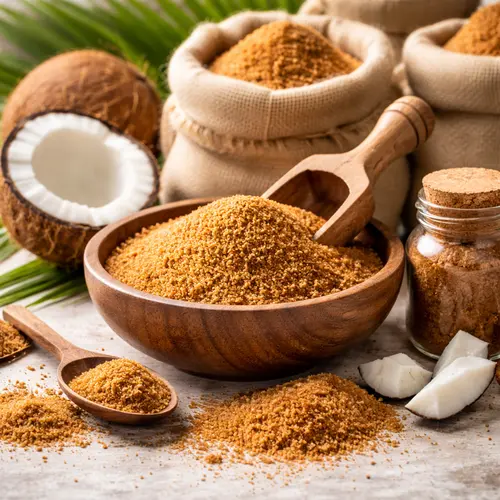
What is Coconut Sugar?
Coconut sugar is a granulated sweetener commonly produced from the sap of coconut palm flower buds and used in a wide range of food applications. Buyers often choose it for its caramel-like flavor profile, dry handling properties, and compatibility with bakery, beverage, confectionery, and dry mix formulations. Depending on your application, you may need a particular granulation, color range, moisture target, or flow characteristic for consistent processing.
- Format: granulated coconut palm sugar
- Options: conventional and organic programs (where available)
- Function: dry sweetener for bakery, beverages, sauces, seasonings, confectionery, and blends
- Target buyers: brands, co-packers, ingredient blenders, bakery & beverage manufacturers
If you are comparing alternative dry sweeteners, coconut sugar is often selected when buyers want a natural-positioned sweetener with a distinctive flavor profile.
Why buyers choose Coconut Sugar
Coconut sugar can help differentiate finished products through flavor, label fit, and dry blend compatibility.
Fast quote checklist
- Program: organic or conventional
- Granulation: fine, medium, or application-specific preference
- Color: lighter or darker range preference
- Packaging: bulk bag, lined carton, or retail/private label format
- Volume: trial + annual forecast
- Docs: spec sheet + COA + allergen statement (and certs if needed)
Common end uses
- Bakery and baking mixes
- Beverage powders and drink mixes
- Sauces, syrups, and marinades
- Confectionery and chocolate
- Retail sweetener packs and jars
Program options
- Conventional and organic options (where available)
- Kosher options (where available)
- Granulation preferences by program
- Private label support (qualified programs)
Documentation support
- Specification sheets
- Lot COAs
- Allergen statements
- Origin / traceability details
- Certificates (where applicable)
Formats, granulation & customization
Coconut sugar is typically sold as a dry granulated sweetener, but programs may vary by granulation, color, flow, and packaging. If you have a target mesh, appearance standard, or reference sample, share it with your quote request.
Common formats
- Standard granulated: widely used across bakery, dry mix, and retail programs
- Fine granulation: useful for faster blending and more uniform dry mix distribution
- Medium granulation: practical for many general food manufacturing applications
- Retail/private label packs: program-dependent for consumer-facing formats
For automated blending and filling lines, tighter granulation ranges can improve consistency and reduce handling variation.
Program & label options
- Conventional: common for broad commercial use
- Organic: available in qualifying programs where supply supports it
- Kosher: available where applicable
- Other considerations: labeling goals, ingredient deck, and customer requirements
If your product has specific certification or labeling requirements, include them in your inquiry and we’ll confirm feasible options.
Handling targets
- Flowability: important for dry blending, filling, and portioning
- Moisture control: helps maintain handling and shelf stability
- Color consistency: supports visual uniformity in packaged goods
If your operation is sensitive to clumping or caking, tell us your storage, humidity, and processing constraints.
Packaging formats (typical wholesale)
- Bulk bags: common for manufacturing and ingredient handling
- Lined cartons / bags-in-box: useful for controlled handling and cleanliness
- Program packaging: discuss case pack and labeling needs for your workflow
Packaging availability depends on supplier and origin. We’ll confirm what is available for your lane and volume.
Alternative sweetener formats (if you’re comparing)
| Format | Best for | Why choose it |
|---|---|---|
| Coconut Sugar | Bakery, dry blends, sauces, retail sweetener programs | Distinct flavor profile and dry handling format. |
| Cane Sugar | Broad mainstream sweetening applications | Widely used, neutral sweetening profile, broad supply availability. |
| Brown Sugar | Bakery, sauces, moisture-rich sweetening systems | Molasses notes and familiar functionality. |
| Liquid Sweeteners | Beverages, sauces, syrups | Useful when dissolved sweetness or pumpable handling is preferred. |
If you are switching sweetener systems, share your current ingredient and what you want to improve: flavor, labeling, flow, color, or handling.
Typical specification parameters (buyer checklist)
Specs vary by origin and program. Below is a practical checklist of parameters buyers often define for coconut sugar. We will provide the actual spec sheet and lot COA for the offered lot.
| Parameter | Why it matters | What buyers commonly specify |
|---|---|---|
| Granulation / mesh | Controls blending, dissolution, filling, and finished-product consistency. | Preferred granulation range or mesh profile. |
| Moisture | Affects caking, flowability, and shelf-life handling. | Target moisture window and storage expectations. |
| Color / appearance | Impacts visual consistency and end-product appearance. | Acceptable color range and appearance limits. |
| Taste / aroma | Important for flavor fit in bakery, beverage, and confectionery formulas. | Clean sweet flavor with expected caramel-like notes. |
| Foreign material control | Critical for food safety and manufacturing compliance. | Screening/sifting approach and acceptance limits. |
| Micro (as applicable) | Required for many retail and food manufacturing programs. | Micro limits aligned to your category and customer requirements. |
| Allergen statement | Supports labeling and facility cross-contact controls. | Allergen matrix and cross-contact declarations. |
| Origin & traceability | Supports procurement, retailer needs, and QA approval. | Country of origin and lot traceability fields. |
| Certifications | Needed for claim support. | Organic / kosher certificates where applicable. |
Common buyer requirements
- Consistent granulation for blending and filling performance
- Moisture control to reduce caking risk
- Color consistency for branded finished products
- Documentation package for vendor approval workflows
What to include if you have an internal spec
- Target granulation or mesh range
- Preferred color and appearance profile
- Moisture or flowability requirements
- Micro limits (if your category requires it)
- Required documentation list (COA/spec/allergen/certificates)
Applications & formulation notes
Coconut sugar is often used to provide sweetness with a distinctive flavor profile in dry and semi-dry formulations. Below are common use-cases and what buyers typically optimize for.
Bakery & baking mixes
- Goal: sweetness with flavor character
- Optimize: granulation consistency and color fit
- Note: align sweetener performance to your finished texture and browning goals
Beverage powders & dry mixes
- Goal: blend uniformity and good dispersion
- Optimize: fine or application-matched granulation
- Note: confirm flowability and moisture handling for your filling process
Sauces, syrups & marinades
- Goal: sweetness plus caramel-like notes
- Optimize: dissolution behavior and flavor balance
- Note: confirm how the sweetener performs in your process conditions
Confectionery & chocolate
- Goal: sweetening with distinct flavor positioning
- Optimize: particle size and flavor compatibility
- Note: sweetness intensity and color should match the finished product profile
R&D and scale-up
If you’re evaluating coconut sugar for a new SKU, a small trial plus a production pilot run is common.
- Confirm granulation and color fit at bench scale
- Validate blending, filling, and flow on production lines
- Lock acceptance criteria before scaling procurement
For a faster iteration, share your current sweetener, target flavor direction, and any flow or caking issues you want to improve.
- Different flavor profile?
- Better blend performance?
- Organic requirement?
- Specific color target?
Quality, documentation & compliance support
We support procurement and QA teams with documentation needed for receiving, vendor approval, and production planning. Documentation availability depends on supplier, origin, and program—request current details with your quote.
Common documentation
- Specification sheet: granulation, moisture targets, and key quality parameters
- COA per lot: lot-level results
- Allergen statement: allergen and cross-contact declarations
- Country of origin: origin statements and traceability fields
- Certificates: organic/kosher where applicable
How we help you move faster
- Align must-have spec limits before booking inventory
- Confirm packaging and case packs for your production workflow
- Support lot traceability for scheduling and QA checks
- Discuss continuity planning for repeat programs
If you have a vendor questionnaire, attach it with your inquiry to streamline approval.
Storage & handling notes
Store sealed cases in a clean, dry environment away from strong odors and humidity. For best product integrity, reduce exposure to moisture and follow FIFO rotation. If your operation requires a specific shelf-life minimum at receipt, mention it in your quote request.
- Keep packaging sealed until use to reduce moisture pickup
- Use clean scoops and containers to prevent contamination
- Track lot codes for traceability
- Confirm your receiving inspection checklist (appearance, aroma, granulation, flow)
FAQ
Questions we hear often from manufacturers and brand buyers.
What is coconut sugar?
Coconut sugar is a granulated sweetener commonly made from the sap of coconut palm flower buds. It is used in bakery, beverage, confectionery, sauces, dry mixes, and retail sweetener products.
Is coconut sugar fine or coarse?
Available granulation can vary by supplier and program. Tell us your preferred texture or mesh range and we’ll confirm the options that fit your application.
Do you have minimum order quantities (MOQs)?
MOQs depend on format, packaging, certifications, and availability. Share your target volume and ship-to region and we’ll reply with MOQ and pricing tiers.
Can I request organic and conventional pricing?
Yes. Where available, we can quote organic and conventional options so you can compare cost, lead time, and labeling fit.
Can you provide custom packaging?
Depending on volume and supplier capabilities, private label and custom packaging formats may be available. Share your packaging needs and labeling requirements for confirmation.
What documentation can you provide?
Common documentation includes a spec sheet, lot COA, allergen statement, and origin information. Certificates (organic/kosher) can be provided where applicable and available—confirm current details with your quote request.
How do I request a fast quote?
Share organic vs conventional, preferred granulation, packaging, trial volume and annual forecast, ship-to region, and required documentation. If you have an internal spec, attach it or paste the key requirements.
Related categories
Browse categories where this ingredient is commonly sourced:
Request a quote for Coconut Sugar
Share target specs (organic/kosher), preferred granulation, annual volume estimate, and delivery region (USA/Canada). You can also use the quick builder below to pre-fill details—then click Request Pricing.
Quick quote builder (optional)
What we’ll confirm in our reply
- Available options: organic/conventional programs and granulation options
- Packaging: case packs and formats that fit your production workflow
- Documentation: spec sheet, lot COA, allergen statement, certificates where applicable
- Lead time: current availability and shipping considerations
- Next steps: sampling, vendor setup, and program scheduling
Prefer email? Write to contact@atlastradehouse.com with “Coconut Sugar” in the subject.