Products / Nuts
Organic • Kosher options • Non-GMO
Nuts
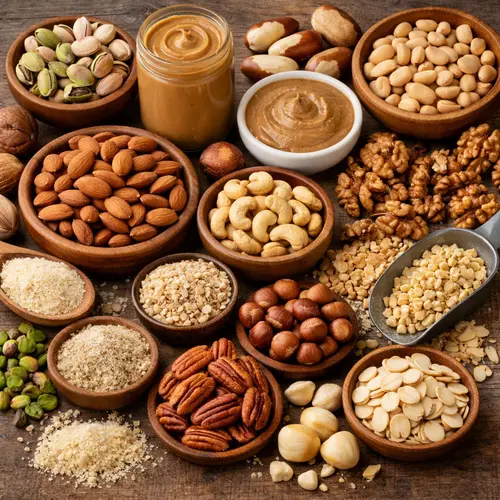
Wholesale supply for nuts with organic options, documentation support, and custom processing formats for USA & Canada buyers. We support manufacturers, brands, bakeries, and co-packers with dependable nut supply in the exact cut and processing format your application requires—whole, halves, pieces, sliced, meals/flours, roasted, blanched, and paste/butter formats (availability varies by nut).
On this page
Jump to product formats, quality considerations, allergen controls, packaging, and the quote form.
Typical items in this category
This page lists common nut ingredients we can source across multiple origins and processing programs. Availability, crop year, sizing, and formats vary—request pricing for current options. If you have a specific grade requirement (e.g., size count, halves/pieces ratio, roast profile, blanch/color targets), include it for the most accurate quote.
| Ingredient | Common formats | Typical use cases | Notes |
|---|---|---|---|
| Almonds | Whole, sliced, slivered, diced, meal/flour, blanched, roasted (as applicable) | Bakery, confectionery, bar inclusions, nut butters | Ask about blanch grade, slice thickness, and roast profile |
| Apricot Kernels | Whole, pieces, meal (as applicable) | Specialty inclusions and niche formulations | Share intended use and spec targets for feasibility |
| Brazil Nuts | Whole, pieces, chopped (as applicable) | Snack mixes, bakery, inclusions | Specify breakage tolerance and size preferences |
| Cashews | Whole, splits, pieces, roasted, butters/pastes (as applicable) | Snacks, sauces, confectionery, dairy-alternative bases | Many programs specify grade and piece size range |
| Hazelnuts | Whole, chopped, diced, meal, paste (as applicable) | Chocolate, spreads, bakery, inclusions | Ask about skin removal/blanching and roast targets |
| Macadamia Nuts | Whole, halves, pieces, roasted (as applicable) | Premium bakery, confectionery, snacks | Specify whole/halves ratio and defect tolerance |
| Peanuts | Whole, split, pieces, roasted, granulated, butters (as applicable) | Confectionery, sauces, snack inclusions, nut butters | High allergen sensitivity—share program requirements early |
| Pecans | Halves, pieces, chopped, meal (as applicable) | Bakery, pralines, inclusions, toppings | Often spec’d by halves quality and piece sizing |
| Pine Nuts | Whole kernels (as applicable) | Pesto, specialty bakery, premium inclusions | Origin and crop seasonality can strongly impact availability |
| Pistachios | Whole, kernels, pieces, roasted (as applicable) | Snacks, bakery, confectionery, toppings | Color/green intensity can be important—share targets |
| Tiger Nuts | Whole, sliced, granules, flour (as applicable) | Gluten-free baking, beverage bases, specialty blends | Often used for texture and mild sweetness |
| Walnuts | Halves, pieces, chopped, meal (as applicable) | Bakery, cereals, salads, inclusions | Share light/amber color targets and piece sizing needs |
Note: “Whole / sliced / diced / granules / powder” varies by nut type. Many nut specs are defined by grade, sizing (count), halves/pieces ratio, and defect tolerances. If you can share your current spec, we can match it closely.
Cut control for consistency
Cut size drives texture, distribution, and yield. We support common cut types and can align sizing to your inclusion or topping needs.
- Whole, halves, pieces, diced/chopped
- Sliced/slivered for bakery and toppings
- Meals/flours for binding or dispersion
Processing options
Depending on nut type and program, we can source raw, roasted, blanched/skinless, salted, and paste/butter formats.
- Roast profiles for flavor and color targets
- Blanching/skin removal where applicable
- Pastes/butters for spreads and bases
Documentation support
We help you compile common QA documents needed for onboarding and receiving, based on what’s available in each supply program.
- COA and specification sheets (as available)
- Allergen and claim documentation
- Traceability by lot and origin
Formats & processing options
Nuts are used across snacks, bakery, confectionery, and sauces—each application benefits from a specific cut and processing approach. Below are common formats buyers request, and what to specify when quoting.
Whole, halves, and pieces
Whole and halves deliver premium appearance, while pieces improve cost control and distribution. Many specs include a target ratio (e.g., halves vs pieces), plus defect and foreign material expectations.
- Grade/sizing: counts, kernel size, or piece size window
- Breakage tolerance: important for premium visuals
- Color targets: especially for walnuts, pistachios, and blanched formats
- Defect limits: shells, skins, discoloration, insect damage
- Moisture & texture: affects bite and shelf life
Tip: If appearance matters (toppings, retail-style inclusions), specify the “visual standard” and acceptable % pieces.
Sliced, slivered, chopped, diced
Cut precision impacts yield in bakery and mixing lines. Slices and slivers are common for toppings; diced and chopped pieces are common for inclusions where uniform distribution is needed.
- Cut dimensions: thickness/length targets where relevant
- Fines control: reduces dusting and improves visual consistency
- Flowability: impacts hopper feeding and dosing equipment
- Roast/blanch compatibility: processing changes fragility
- Application: toppings often prioritize aesthetics; inclusions prioritize uniformity
Tip: For automated depositing, request a cut that feeds consistently with low fines to reduce downtime.
Meals, flours, and granulated nuts
Nut meals and flours are used for binding, thickening, texture, and flavor. Performance varies by granulation and oil content.
- Granulation: fine vs coarse changes mouthfeel and dispersion
- Oil release: impacts clumping and shelf stability
- Roasted vs raw: changes flavor intensity and color
- Application behavior: coatings, batters, bakery, sauces
- Labeling needs: align naming and ingredient statement preferences
Tip: For coatings and breading systems, confirm granulation and fines limits to ensure consistent pick-up.
Pastes and nut butters
Nut butters and pastes are used in spreads, confectionery, sauces, and dairy-alternative bases. Specs often focus on roast profile, viscosity/texture, oil separation behavior, and ingredient constraints (salt, sugar, stabilizers).
- Roast profile: light/medium/dark flavor targets
- Texture: smooth vs crunchy (particle size range)
- Ingredients: 100% nut vs stabilized formulas (program-dependent)
- Viscosity needs: pumping, depositor, or kettle mixing compatibility
- Packaging: pails/drums and handling requirements
Tip: If you need pumpable paste, share process temperature, shear, and target viscosity range if known.
Quality, food safety & documentation
Nut programs often require robust QA alignment due to allergen controls and variability across origins and seasons. Where supported by the supply program, we can help provide common documents used for onboarding and receiving.
Common documents (as available)
- Certificate of Analysis (COA) by lot
- Specification sheets
- Allergen statements
- Non-GMO statements (program-dependent)
- Organic certificates for organic items
- Kosher certificates for certified items
Specs buyers often request
- Grade/sizing and tolerance windows
- Defect limits and foreign material controls
- Moisture targets and shelf-life guidance
- Roast profile and color standards (where applicable)
- Packaging, labeling, and lot coding requirements
If you have a vendor approval questionnaire, include it with your quote request.
Storage & handling guidance
- Keep sealed and protected from humidity
- Store cool and dry, away from strong odors
- Use FIFO rotation and record lot codes
- Protect from pests and temperature swings
Exact storage recommendations vary by nut and packaging—ask for item-specific guidance.
Allergen & cross-contact considerations
Nuts are major allergens, and many facilities handle multiple allergens. Your program may require specific documentation, segregation, and labeling practices. Share your requirements early so we can focus on suitable supply programs.
What to tell us
- Your target allergen statement language
- Any “may contain” policy constraints
- Segregation expectations for storage/handling
- Gluten/wheat cross-contact concerns (if relevant)
- Documentation needed for QA release
Common risk points
- Shared equipment across nut types
- Shared lines for peanuts and tree nuts
- Blending/co-packing environments
- Rework practices in some operations
- Transportation and warehousing mix
We can help you assess whether a supply program aligns to your internal allergen risk policy.
Labeling & lot tracking
- Lot codes for traceability
- Item identifiers matched to your ERP/PO
- Allergen labeling alignment
- Receiving inspection suggestions
- Documentation retention support
How buyers use nuts
Nuts add texture, flavor, and premium positioning across many product categories. Buyers often choose specific cuts and processing levels to optimize cost, appearance, and line performance.
Bars & snacks
- Pieces for uniform distribution
- Roasted formats for flavor intensity
- Meals for binding and texture control
Bakery
- Sliced/slivered for toppings
- Chopped for inclusions
- Meals/flours for specialty doughs
Confectionery
- Whole/halves for premium visuals
- Pastes for fillings and spreads
- Roasted profiles for signature flavor
Sauces & bases
- Nut butters for sauces and dressings
- Cashew bases for creamy textures
- Granulations for controlled viscosity
How to select the right nut spec for your application
The “right” nut depends on your process, texture targets, and cost constraints. Here are common selection factors manufacturers use when specifying nuts for production.
| Selection factor | Why it matters | What to specify | Best-fit examples |
|---|---|---|---|
| Cut size & uniformity | Controls distribution, dosing, and bite | Pieces size window, fines limits, slice thickness | Bar inclusions, granola, toppings |
| Processing | Changes flavor, color, shelf life, and fragility | Raw vs roasted, roast level, blanched/skinless | Confectionery, bakery, snack mixes |
| Appearance | Impacts premium perception and visual standard | Whole/halves ratio, color targets, defect tolerance | Premium toppings, chocolate, bakery garnish |
| Functionality | Affects binding, viscosity, and texture in mixes | Meal/flour granulation, paste texture/viscosity | Sauces, spreads, drink mixes |
| Allergen program | Drives documentation, labeling, and suitability | Allergen statement needs, cross-contact policy constraints | Brands with strict allergen risk policies |
| Cost & yield | Pieces vs whole can optimize cost-per-serving | Target price range, acceptable cut tradeoffs | High-volume inclusions and blended toppings |
If you’re switching suppliers, include your current spec sheet or list the parameters you measure (size, color, defects, roast). Matching a like-for-like spec reduces rework and trial iterations.
Packaging & logistics for bulk nut supply
Packaging depends on nut type, format, and your handling environment. Many buyers prefer bagged formats for flexibility; higher-volume programs may benefit from larger bulk formats for reduced handling. Share your warehouse constraints and we’ll align packaging accordingly.
Typical pack options
- Food-grade bags for kernels and pieces (common)
- Pails/drums for pastes and butters (as applicable)
- Bulk formats for select high-volume programs
Exact pack sizes vary by nut and program—tell us your preference and pallet constraints.
Lead time drivers
- Seasonality and crop timing by origin
- Processing requirements (roasted/blanched/cut)
- Certification verification (organic/kosher)
- Lane capacity and appointment scheduling
Receiving checklist
- Dock type and unloading requirements
- Delivery windows and appointment policy
- Labeling requirements (lot, PO, item codes)
- Storage conditions and pest-control readiness
Request a quote for nuts
Share the details below and we’ll respond with available options for your target volume in the USA or Canada. This form pre-fills into your main contact workflow for faster handling.
Quick quote details
FAQ
Do you offer organic options for Nuts?
Many items in this category have organic options. Share your certification requirements (organic/kosher/non-GMO), nut type, format, and delivery lane, and we’ll confirm current availability by origin and program.
Can you supply bulk packaging?
Yes—bulk and wholesale packaging is available depending on nut type and format. Many kernel and piece formats are supplied in bags, while pastes and butters may be available in pails or drums. Tell us your preferred packaging and receiving constraints.
Do you support custom processing?
Often yes. Options can include tailored cuts, slicing, meals/flours, roasting, blanching/skin removal, and paste/butter formats. Share your spec sheet and intended application so we can propose the best match.
How do I choose the right nut cut for inclusions?
For uniform distribution, pieces with controlled sizing and low fines are common. For premium visuals, halves or whole kernels may be preferred. Your depositor or blender may also drive cut selection—tell us your process and target bite.
Do you offer roasted nuts?
Many nuts are available raw and roasted depending on the supply program. If you need a specific roast profile, color, or salt level, include it in your request.
Can you provide documentation for QA and audits?
Where available, we can provide common documentation such as COA, specifications, allergen statements, and applicable certificates (organic/kosher). If your company uses a vendor onboarding packet, send it with your inquiry.
Do you ship to both the United States and Canada?
Yes. We support buyers in the United States and Canada. Share your destination ZIP/postal code and receiving details so we can align lane feasibility and packaging.
What’s the best storage approach for nuts?
Store sealed in a cool, dry environment away from strong odors and humidity. Use FIFO rotation and record lot codes for traceability. Item-specific guidance varies—ask for recommendations based on your nut type and storage conditions.
Ready to source nuts for your production line?
Whether you need premium whole kernels for toppings, controlled pieces for inclusions, nut meals for coatings, or nut butters for spreads and sauces, we can help you align the right format, documentation, and delivery plan for your program.
For urgent requests, include your nut type, format, volume, destination, and any certification or allergen requirements so we can respond with the most relevant options.