Home / Products / Cacao & Cocoa / Cacao Beans
Wholesale ingredient • Documentation support • Custom processing
Cacao Beans
Wholesale supply for Cacao Beans with consistent specs, documentation support, and flexible formats for USA & Canada buyers—from R&D trials to production volumes.
Quick purchasing checklist
- Processing: raw/unroasted, roasted, or specialty profiles (when available)
- Use: bean-to-bar, nib production, brewing/infusion, coatings, inclusions
- Quality targets: moisture, bean count/size, defect limits, sensory profile
- Certifications: organic/kosher requirements (if needed)
- Volume: trial, monthly demand, annual forecast
- Destination: USA or Canada + receiving constraints
- Documentation: COA/spec/allergen/traceability for onboarding
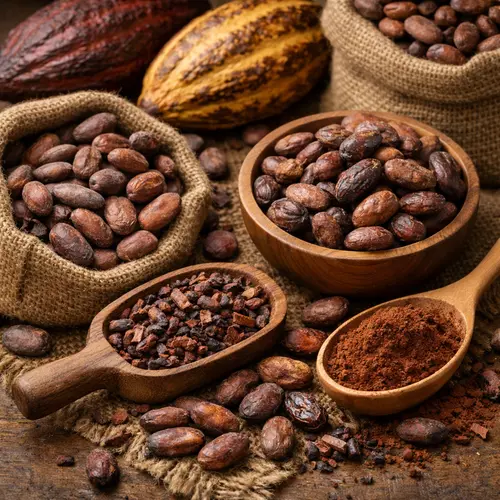
What are cacao beans?
Cacao beans are the seeds of the cacao fruit. After harvest, beans are typically fermented, dried, and then shipped for further processing. Many manufacturers roast and winnow beans to produce cacao nibs, then grind nibs into cocoa liquor as part of chocolate production.
In wholesale procurement, cacao beans are commonly specified by origin, processing status (raw vs. roasted), bean sizing, moisture, defect tolerance, and the sensory profile you want your finished product to express.
- Primary use: bean-to-bar, nib processing, cocoa liquor production
- Flavor drivers: origin, fermentation style, drying practices, roast profile
- Operational considerations: cleaning/sorting, winnowing yield, consistency for production
Why source wholesale through Atlas?
We help buyers align cacao bean sourcing with the realities of production: repeatable specs, practical QA onboarding, and packaging that supports receiving and storage.
- Spec alignment: define quality targets and confirm practical tolerances
- Documentation support: COA/spec sheets + lot traceability for QA teams
- Flexible formats: whole beans, nib conversion support, and related cacao ingredients
- Buyer fit: manufacturers, brands, co-packers, and specialty producers
Documentation and processing availability can vary by origin and format—request current details with your quote.
Common formats & processing options
Cacao beans are purchased in whole form, but buyers often request additional processing or downstream conversion depending on the application and volume.
Whole beans (standard)
- Fermented & dried beans (typical trade format)
- Specified by origin, moisture, and defect limits
- Supports in-house roasting and winnowing
Best for: bean-to-bar, liquor production, specialty roasting.
Roasted beans (when available)
- Consistent roast profile where supported
- Can reduce in-house processing steps
- Useful for small production setups
Best for: faster production, consistent roast for repeat batches.
Conversion to nibs
- Winnowed nib formats depending on supply
- Size ranges or sieve preferences possible
- Supports inclusions and milling workflows
Best for: inclusions, baking, snacks, and cocoa liquor milling.
Cleaning & sorting
- Screening for size distribution
- Foreign material control steps
- Optional sorting depending on program
Helpful for: reducing line stoppages and improving yield.
Private label programs
- Retail/foodservice pack formats (where supported)
- Documentation package for onboarding
- Label claims aligned to actual availability
Best for: brand programs and contract packaging.
Related cacao ingredients
- Pair sourcing with nibs, powders, and cocoa inputs
- Streamline RFQs and documentation
- Reduce inbound vendor complexity
Best for: consolidated buying and forecast planning.
Need a specific roast profile, bean sizing preference, or defect tolerance? Tell us your application and we’ll match an option.
Typical specs procurement teams request
Specs can vary by origin and supply program. Below are common data points used in procurement and QA onboarding.
- Origin: country/region + any program notes (single origin or blend)
- Processing: fermented & dried, roast-ready, or roasted (if available)
- Moisture: target range aligned to storage stability and mold prevention
- Bean sizing: bean count/size distribution preferences (when specified)
- Defect tolerance: broken beans, flat/slaty beans, foreign material control
- Micro profile: ingredient-level microbial criteria where available
- Sensory targets: acidity, bitterness, roast compatibility, aroma notes
- Allergen statement: facility handling notes and cross-contact statements
Handling, storage & production considerations
Cacao beans can absorb odors and moisture. Storage and handling discipline helps protect flavor and reduce variability across production runs.
- Storage: cool, dry space; sealed packaging after opening
- Odor control: avoid storage near strong spices, chemicals, or fragrances
- Inventory rotation: FIFO helps maintain flavor consistency
- Pre-processing: cleaning/sorting can reduce foreign material risk
- Roast development: roast profile impacts bitterness and aroma; align to your end product
If you’re new to cacao processing, we can recommend practical specs and formats that fit your production setup.
Applications & product development ideas
Whole cacao beans are most often used in chocolate processing workflows, but they also appear in specialty food products. Below are common uses and formulation notes.
Bean-to-bar chocolate
- Roast, crack, winnow, refine, conche
- Origin selection shapes flavor identity
- Consistency matters for repeat SKUs
Cocoa liquor production
- Winnowed nibs milled to liquor/paste
- Particle size influences viscosity and mouthfeel
- Defect control improves flavor stability
Specialty food & beverage
- Infusions, brews, and culinary applications
- Roast profile drives aroma and bitterness
- Consider grind/fragment size for extraction
Inclusions (via nib conversion)
- Convert beans to nibs for bars, granola, bakery
- Choose sizing for crunch/visual impact
- Lower fines can improve blending
Coatings & confectionery
- Liquor inputs for chocolate coatings
- Consistency supports tempering stability
- Origin + roast aligns to flavor brief
R&D trial programs
- Short runs for sensory evaluation
- Compare origins and roast outcomes
- Set a spec for scale-up consistency
Options & documentation
- Ask for organic, kosher, and origin-specific options
- COA and specification sheets for receiving and QA onboarding
- Allergen statements and traceability details where available
- Support for import/export paperwork when needed
- Private label support depending on program and volume
Documentation availability can vary by origin and format—request current details with your quote.
Packaging & logistics notes
Packaging depends on supplier/origin and your order profile. Common wholesale approaches include bulk bags or cartons and palletized shipments for warehouse receiving efficiency.
- Bulk packaging: lined bags or cartons (varies)
- Palletization: improved handling and storage
- Lot labeling: aligned to COA/traceability
- Lead times: vary by origin and processing; request current availability
If you need consistent reorders, share your forecast so we can align a repeatable supply plan.
Quality approach (manufacturer-friendly)
Our goal is to help your team buy with confidence by aligning specifications, documentation, and operational realities before the ingredient hits your line—especially important when you’re scaling a cacao program.
Specification alignment
Confirm key targets like origin, moisture, and defect tolerance—plus any special needs for roasting or winnowing yield.
Documentation support
Provide COA/spec/allergen/traceability items typically required for onboarding and receiving QC.
Repeatability
Build reorder-ready specs so you can maintain flavor consistency and reduce variability across production runs.
FAQ
Do you have minimum order quantities (MOQs)?
MOQs depend on origin, processing needs, certifications, and packaging. Send your target volume and destination (USA/Canada) and we’ll confirm options.
Can I request organic and conventional pricing?
Yes. Where available, we can quote organic and conventional cacao beans so you can compare cost and labeling needs.
Do you offer custom processing (roast profile, winnowing, nibs, grinding)?
Depending on origin and volume, we may support custom processing such as roasting, winnowing to nibs, sizing, or milling. Tell us your application and target specs.
What documentation can you provide?
Common documentation includes a COA, specification sheet, allergen statement, and country of origin. Additional documentation may be available upon request depending on the lot and supplier.
How do I request a quote faster?
Include your target origin (if you have one), processing (raw/roasted), certifications, estimated volume, delivery location, and any QA onboarding requirements. The more detail you share, the faster we can match an option.
Related categories
Browse categories where this ingredient is commonly sourced:
Related products (commonly paired)
If you’re working with cacao beans, these are frequently sourced together:
- Cacao Nibs (winnowed, sized)
- Cocoa Powder (for baking and mixes)
- Cacao Powder (raw-style profiles where available)
- Coconut Flakes (bars, bakery, toppings)
Request a quote for Cacao Beans
Share target specs (organic/kosher), processing preference (raw/roasted), estimated annual volume, and delivery region (USA/Canada). If you have a spec sheet or internal requirements list, include it so we can align supply to your QA and production needs.
What to include
- Company name + intended use (manufacturer / brand / co-packer)
- Origin preference (if any) + desired flavor profile
- Processing request (raw/roasted) + any winnowing needs
- Estimated quantity (trial, monthly, annual)
- Delivery city/state/province + receiving constraints
- Documentation needed (COA/spec/allergen/traceability)
What you’ll get back
- Matched options by origin and processing availability
- Documentation package for QA onboarding
- Lead time + logistics guidance
- Spec alignment for repeat reorders
Ready to start? Use the quote form and include as many details as possible.
Notes for QA & labeling teams
Availability, certifications, and documentation vary by origin and supplier. Confirm final specifications and labeling claims for your exact lot and format before production and packaging approval.