Home / Products / Coconut Ingredients / Aminos
Wholesale ingredient • Documentation support • Bulk packaging
Aminos
Wholesale supply for Aminos with consistent specs, food safety documentation, and bulk packaging formats for USA & Canada buyers. Most commonly sourced as coconut aminos and similar aminos-style savory liquid seasonings used in sauces, marinades, dressings, and ready-to-eat foods.
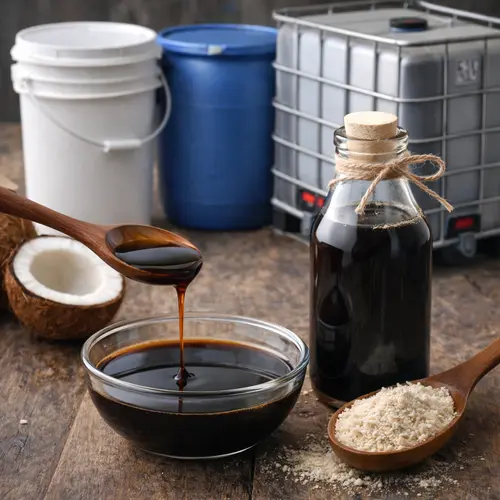
What are “Aminos” used for in manufacturing?
Aminos-style seasonings are used to deliver a savory, umami-forward profile in finished foods. They are commonly used as a soy sauce alternative in formulations that want a different allergen profile or label positioning. Manufacturers use aminos in sauces, marinades, dressings, seasoning systems, and plant-based foods.
Because “aminos” can refer to different product types, it helps to specify your target taste profile and application. If you have a benchmark (existing coconut aminos or liquid seasoning), include it in your request.
Fast quote checklist
Send these details to get the fastest pricing and lead-time guidance:
- Product type: coconut aminos or aminos-style savory seasoning
- Taste target: soy-sauce-like, sweeter, more savory, or custom
- Specs (if you have them): brix, pH range, viscosity, color
- Packaging: cases, pails, drums, totes + your receiving setup
- Certifications: organic, kosher (where available)
- Volume & delivery: trial + annual forecast; USA/Canada destination + timeline
Tip: If you’re filling retail bottles, tell us your line setup and whether you need a tighter viscosity target for consistent filling.
Request PricingOn this page
Types & product options
“Aminos” can refer to different savory liquid seasonings. Availability depends on program, origin, and your labeling requirements. Below are common ways manufacturers specify their aminos needs.
Coconut aminos
- Savory, umami-forward liquid seasoning
- Used in sauces, marinades, and dressings
- Often selected for soy-sauce-alternative positioning
Best for products targeting a coconut-aminos style profile.
Aminos-style savory seasonings
- Used when brands need a specific taste profile
- May be optimized for salt/sweetness balance
- Suitable for custom formulation needs (program-dependent)
Best when you’re matching a benchmark flavor or performance spec.
Program options
- Organic options (where available)
- Kosher options (where available)
- Bulk packaging for co-packers and manufacturers
Tell us your label claims and customer requirements.
Typical specifications (guidance)
Liquid seasoning specs help ensure consistent taste and processing performance. Exact targets vary by program and application. Share your internal spec sheet (if available) so we can match the best option.
| Spec category | What it controls | What to tell us |
|---|---|---|
| Flavor profile | Sweet/savory balance and soy-sauce-like perception. | Benchmark target; “more savory” vs “sweeter”; usage rate. |
| Brix / solids | Sweetness perception and concentration. | Any brix target or sweetness constraints; dilution method. |
| pH | Stability, compatibility with your formulation, and QC controls. | Your process requirements and whether the product is heat processed. |
| Viscosity | Fill performance and mouthfeel. | Whether you fill retail bottles or use bulk dosing; your pump/filler setup. |
| Color / clarity | Finished product appearance. | Desired shade and whether clarity/haze matters. |
| Packaging compatibility | Handling and receiving efficiency. | Cases/pails/drums/totes; any valve/fitting requirements. |
| Traceability / lot control | QA release and audit readiness. | Lot documentation needs and any vendor-approval checklist items. |
| Certifications | Label claims and customer acceptance. | Organic/kosher needs; other claim constraints where applicable. |
Applications & formulation notes
Aminos products are used anywhere you need a savory backbone. Selection often depends on your salt/sweetness target, whether the product is heated, and the sensory profile required.
Marinades
- Savory base for proteins and plant-based items
- Works well with garlic, ginger, citrus, and spice systems
- Specify sweetness direction and color preference
Tell us if you blend with vinegar, sweeteners, or oils.
Sauces & glazes
- Umami base for stir-fry sauces and dipping sauces
- Viscosity and solids can matter for texture
- Color consistency matters for retail appearance
Tell us if you hot-fill or retort; share pH/processing constraints.
Dressings
- Supports savory depth in emulsified dressings
- Pairs with citrus, mustard, herbs, and oils
- Neutral flavor consistency improves repeatability
Tell us if you want a lighter color or a stronger savory note.
Seasoning bases & ready meals
- Umami builder in ready-to-eat foods
- Useful for plant-based and savory applications
- Lot traceability supports QA release
Share your dosage rate and whether the product is heat processed.
Private label & co-packing
- Bulk supply for bottling and filling operations
- Packaging choices support efficient line feeding
- Documentation support for retail programs
Tell us your bottle size, throughput, and whether you need a consistent viscosity target.
Packaging formats & handling
Packaging choice affects handling efficiency, receiving procedures, and line feeding. Availability depends on program and volume.
Cases
- Convenient for smaller runs and pilot production
- Easier handling without pumps
- Good for R&D and test launches
Tell us your preferred case pack and receiving constraints.
Pails / drums
- Common for manufacturing and co-packers
- Supports pump-based feeding systems
- Efficient warehouse storage footprint
Tell us your pump/fitting requirements and unloading process.
Totes (IBCs)
- High-volume option for continuous production
- Reduced changeovers and packaging waste per lb
- Works well for recurring demand
Confirm dock access and tote handling equipment availability.
Storage, shelf life & best practices
Storage guidance can vary by product and program. Best practices help maintain flavor and process performance. Request current storage recommendations and shelf-life guidance for the option you’re quoting.
Storage best practices
- Store sealed, cool, and away from direct light
- Avoid repeated temperature cycling
- Use FIFO rotation with lot tracking
- Keep containers closed when not dispensing
Tell us your storage temperature range if you need program guidance.
Shelf life planning
- Shelf life depends on packaging, storage, and program
- Plan usage rate vs receiving frequency
- Lot documentation supports QA release and traceability
Request current shelf-life guidance for your selected packaging format.
Quality, documentation & compliance
We support procurement and QA teams with documentation aligned to manufacturing and customer audit requirements. Documentation availability can vary by origin and program—request the current set with your quote.
Documentation support
- Certificate of Analysis (COA)
- Specification sheet
- Allergen statement
- Lot / traceability information
- Country of origin information
Certification options
- Organic options (where available)
- Kosher options (where available)
- Other claim support depending on program
Tell us your label claims and any customer-mandated requirements.
Spec alignment
- Match to brix, pH, viscosity, and sensory goals
- Packaging alignment for your production line
- Support for repeat orders and forecasting
Share your internal spec or a recent COA to speed up matching.
Learn more about our approach on the Quality & Certifications page.
FAQ
Do you have minimum order quantities (MOQs)?
MOQs depend on the product and packaging format (cases, pails, drums, totes). Share your target volume and delivery region (USA/Canada) and we’ll reply with options.
Is “Aminos” the same as soy sauce?
Aminos products are often used as a soy-sauce-style seasoning component, but they are not identical. Tell us your target taste profile and labeling constraints and we’ll recommend a suitable option.
Which packaging format is best for manufacturing?
Cases work well for smaller runs and R&D. Pails and drums are common for mid-to-high volume production with pumping systems. Totes (IBCs) are often used for high-volume continuous processing. Share your receiving setup and we’ll quote the best option.
What documents can you provide for aminos products?
Documentation may include COA, specification sheet, allergen statement, country of origin details, and lot/traceability information. Availability can vary by origin and program.
Do you support private label?
Private label support may be available depending on program and volume. Share your packaging needs, forecast, and destination, and we’ll confirm feasibility.
Have a question not listed here? Use the contact form and select “Aminos” to route your request.
Request a quote for Aminos
Share target specs (organic/kosher), product type, packaging format, annual volume estimate, and delivery region (USA/Canada). If you have a spec sheet, paste key values (brix/pH/viscosity/color) to speed up matching.
What to include
- Product type: coconut aminos or aminos-style seasoning
- Flavor direction: sweeter vs more savory; benchmark if available
- Specs: brix, pH, viscosity, color (if required)
- Packaging: cases, pails, drums, totes + receiving setup
- Certifications: organic, kosher (if required)
- Volume & destination: trial + annual forecast; USA/Canada region and timeline
Need help picking an option?
If you’re unsure, tell us your product type and top priorities: soy-sauce-style taste, less sweet, organic program, bulk packaging, or private label. We’ll recommend a starting point and provide pricing options where available.
Request PricingYou can also contact us directly at contact@atlastradehouse.com.
Looking for other coconut ingredients?
Browse our catalog for organic and specialty ingredients used by manufacturers, brands, and co-packers.